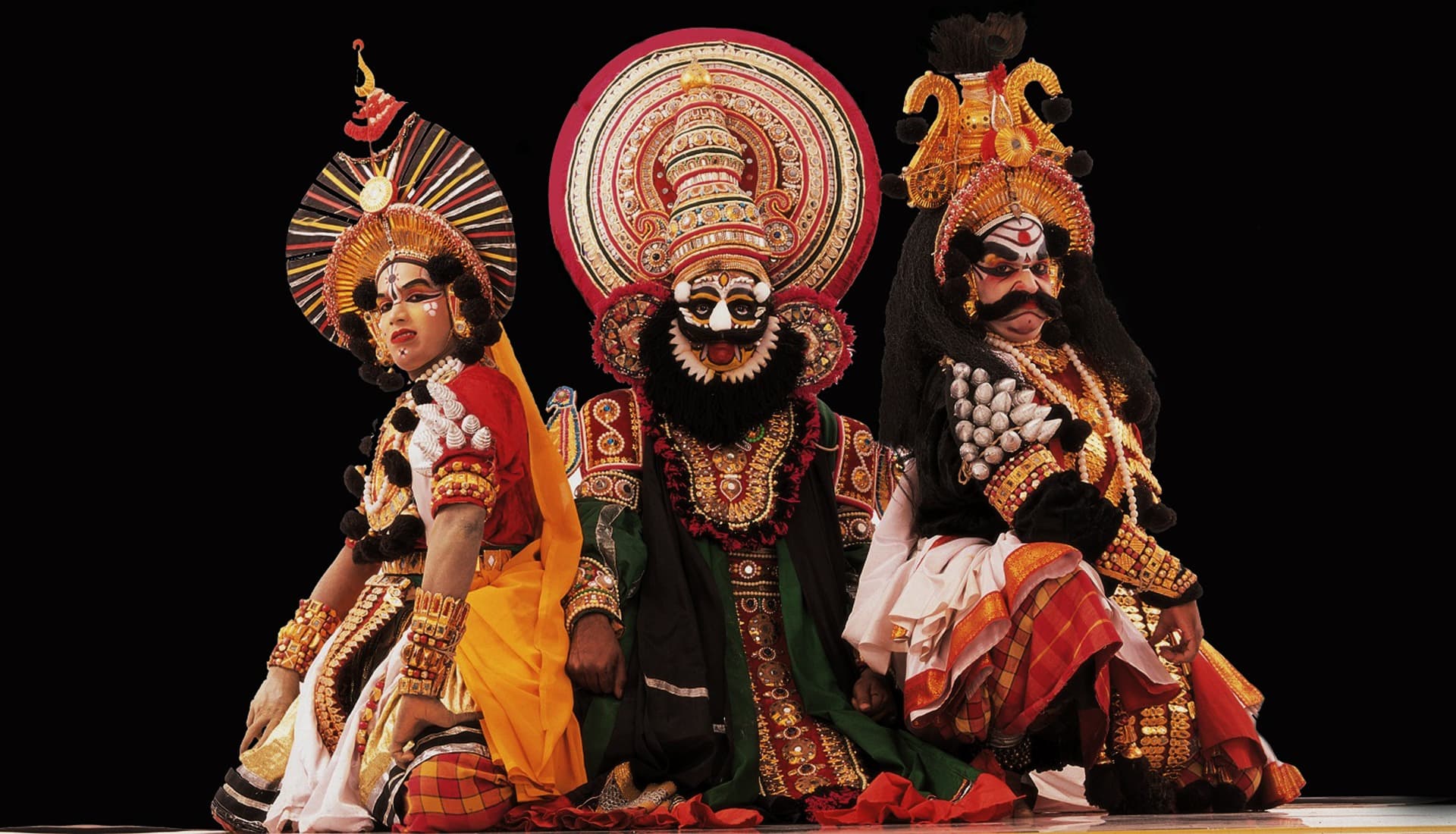
The living soul of the coast
Where the Western Ghats slope down to the Arabian Sea lies a lush green strip of land laced with tidal rivers, paddy fields and coconut groves. Across its villages flow a remarkable confluence of languages (Tulu, Konkani and Kannada among them) and a deep tradition of festivals and folk arts.
Of all these living arts, none is more celebrated than Yakshagana: the spectacular open-air dance-drama that turns temple courtyards and harvested fields into stages, and runs from dusk until dawn. Kundapura sits squarely within its heartland, and the region has nurtured legendary artists and troupes for generations.
This portal gathers the whole world of Yakshagana, its origins, its two great styles, the craft of its costume and music, its troupes and master artists, and the fight to keep its lamp burning.
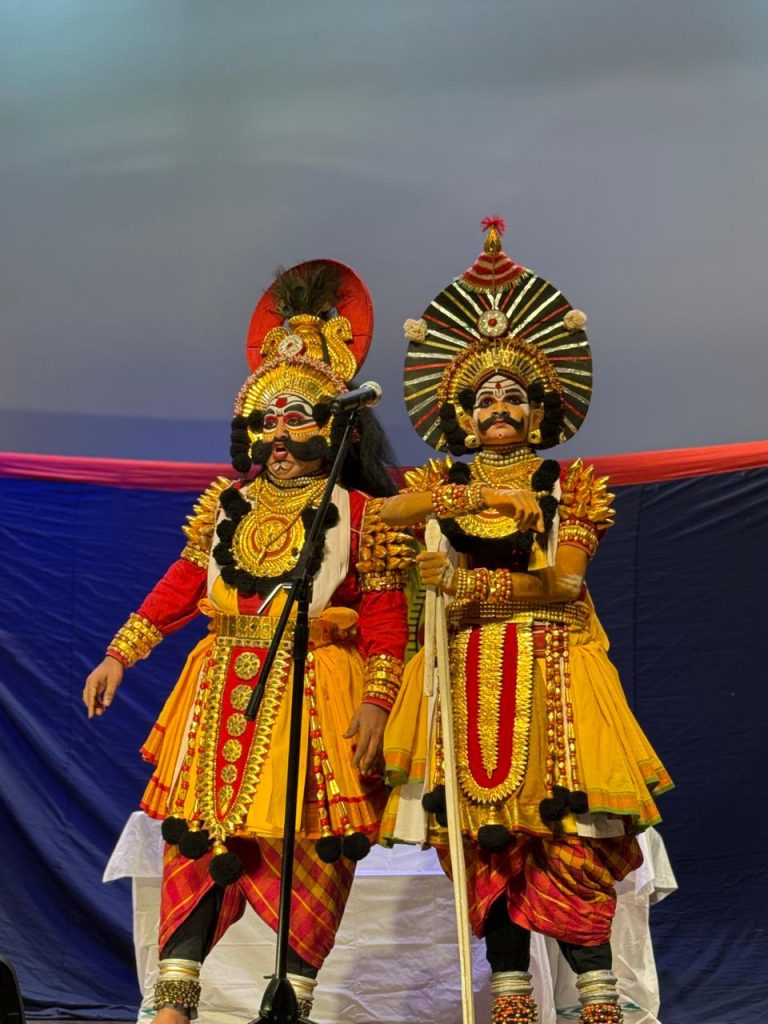
In Kannada, Yaksha means celestial or divine beings and Gana means music, so Yakshagana is understood as "the music of the divine." A single performance dramatises episodes from the Ramayana, Mahabharata, Bhagavata and the Puranas, enacted through classical and local verse sung by the Bhagavata.
Himmela & Mummela
The art has two halves. The Himmela is the music ensemble behind the action, the Bhagavata (chief singer-narrator), the chande and maddale drums, the taala cymbals and harmonium. The Mummela is the front of the stage, the costumed dancers and actors, whose hallmark is improvised, debated dialogue that elaborates the story in real time.
Four ways into the art
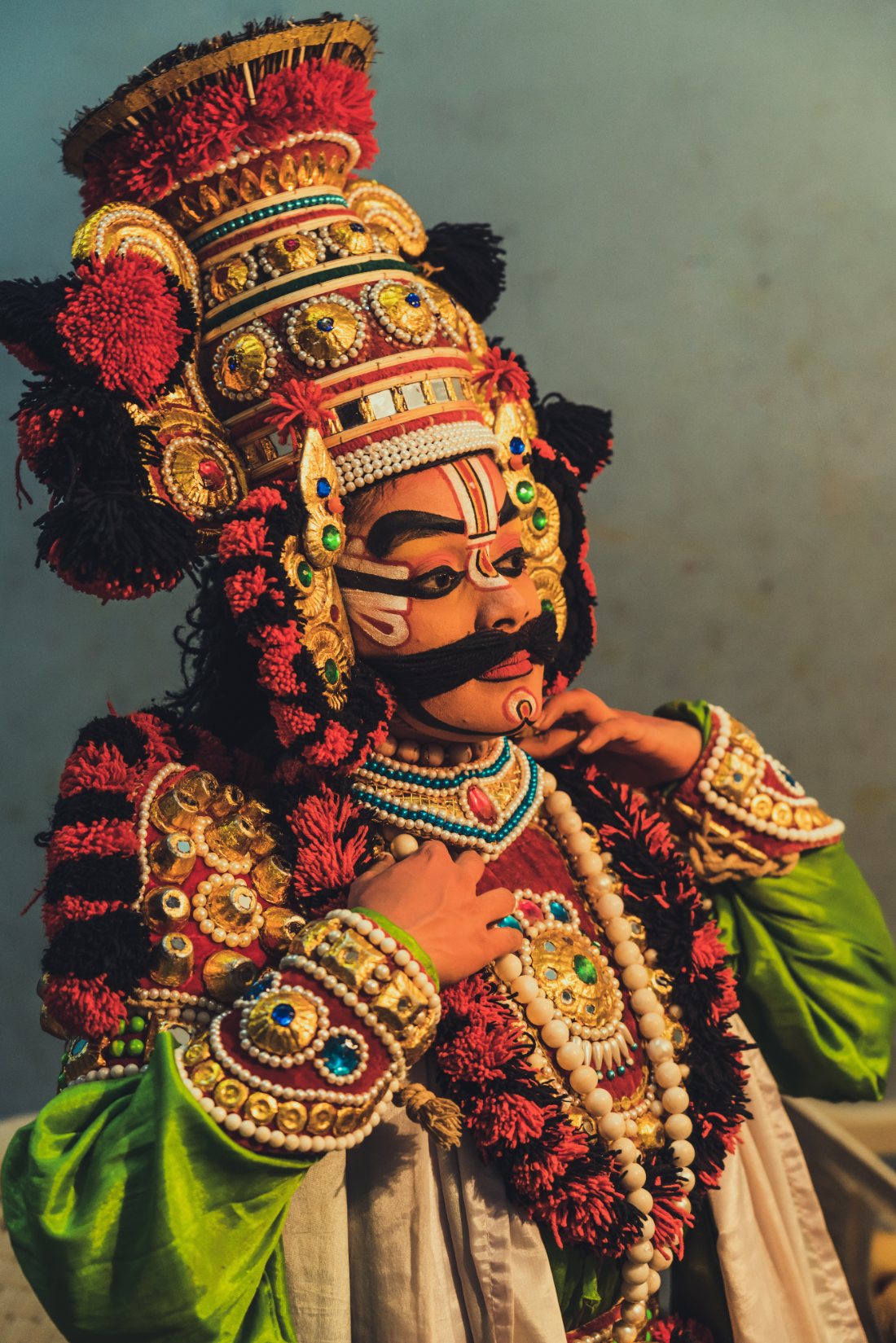
Origins & History
From village deity worship and puppet theatre to the refined dance-drama of today.
Read more →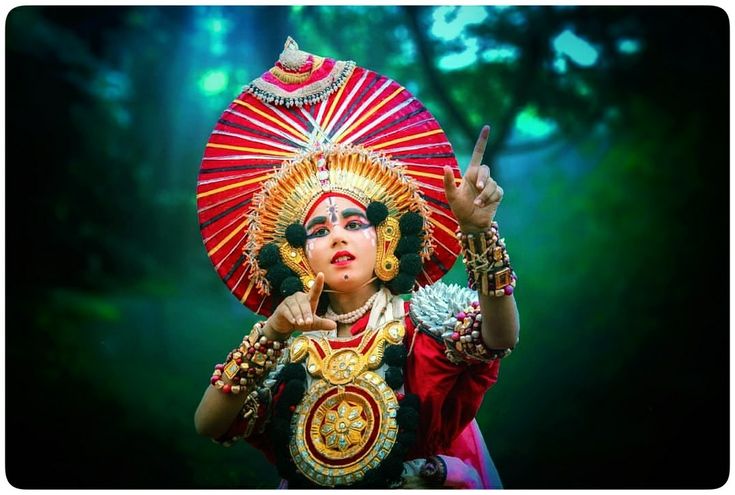
Styles & Performance
Badagutittu and Tenkutittu, the music of the Himmela, and how a night unfolds.
Read more →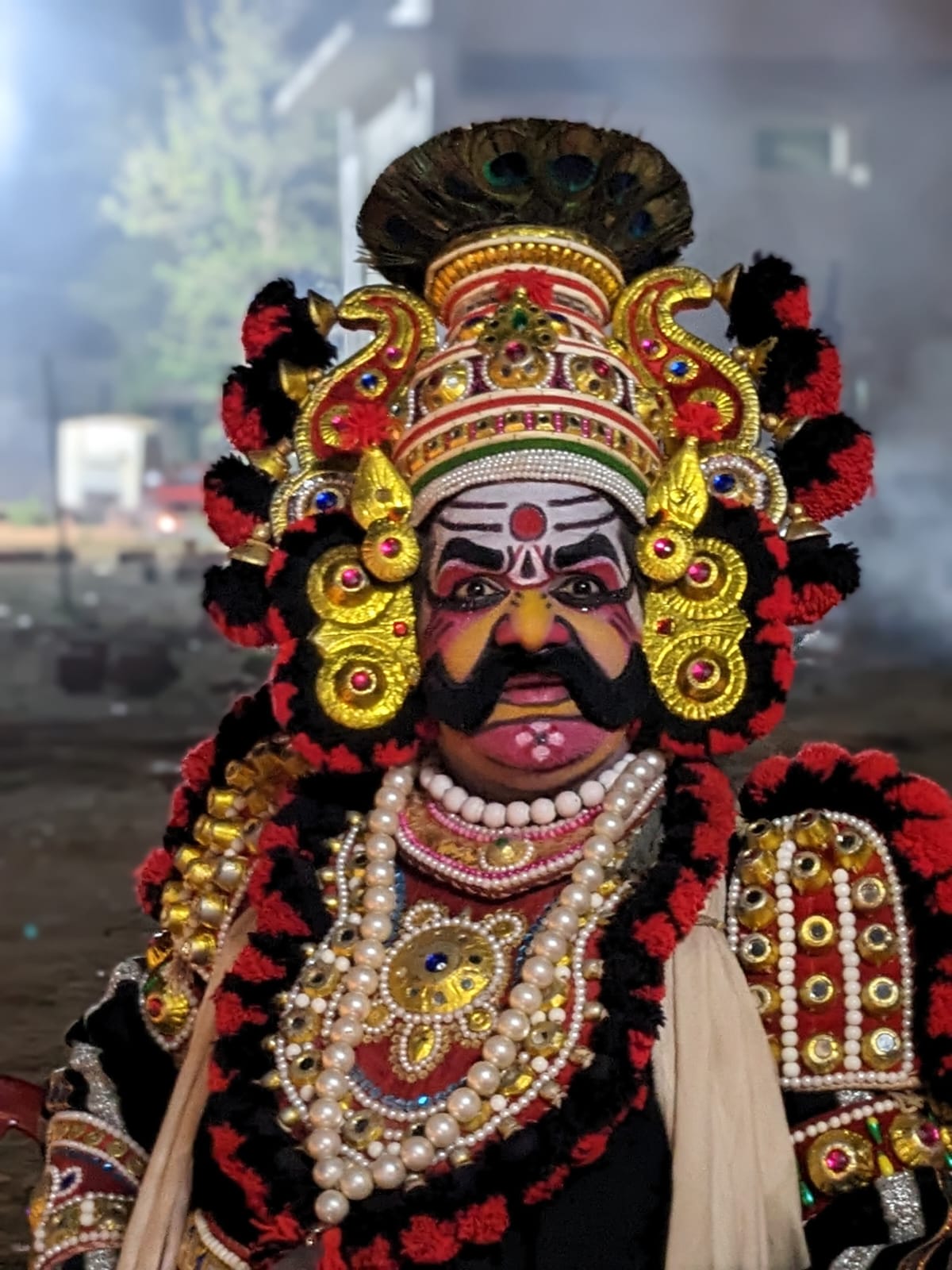
Costume, Makeup & Characters
Painted faces, towering crowns, colour codes and the fearsome Bannada Vesha.
Read more →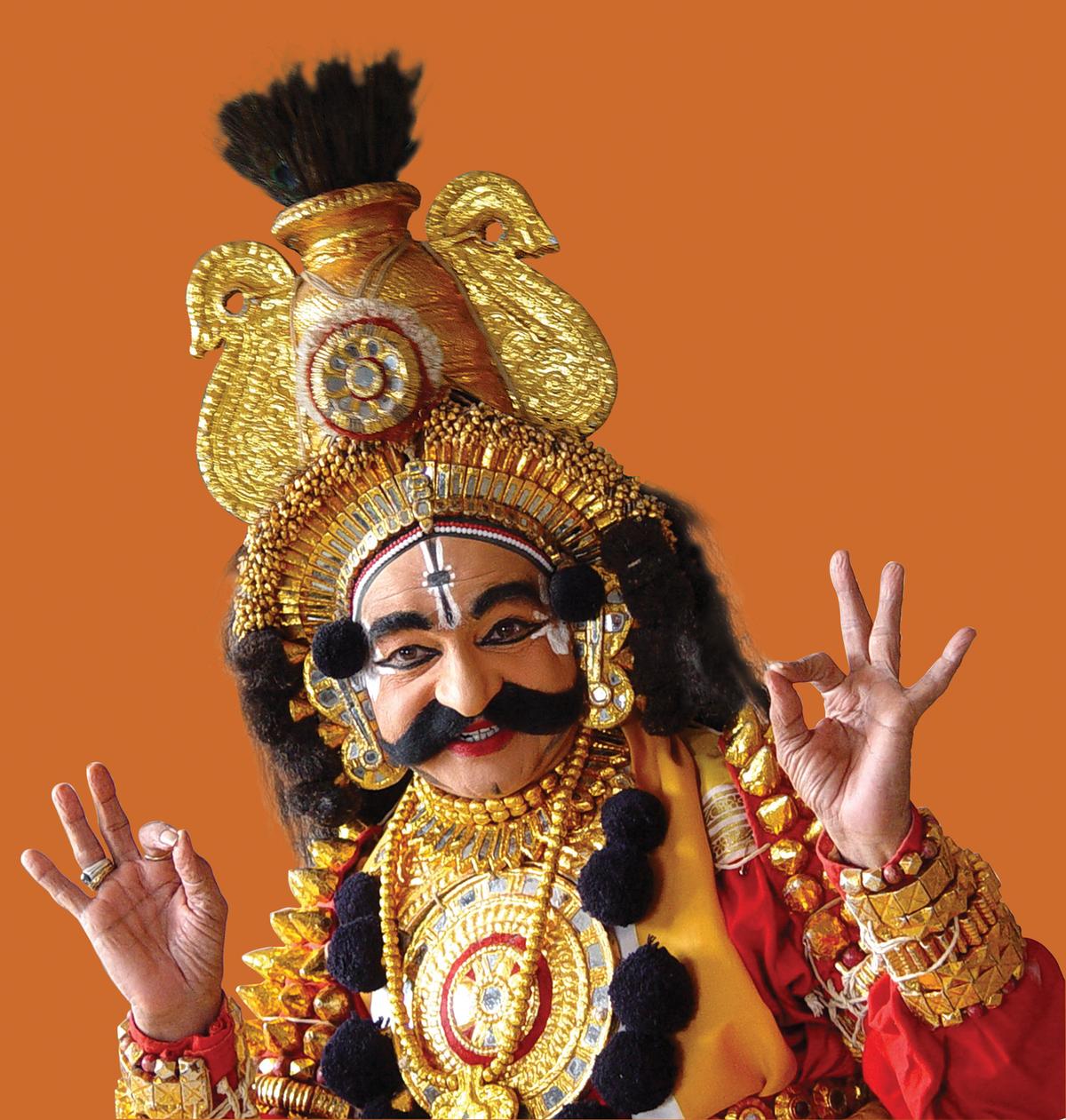
Melas, Artists & Future
The great troupes, the gurukula schools, master artists and the work of preservation.
Read more →"A school of reflection, warriors, Yakshas and gods brought to life from dusk until dawn."
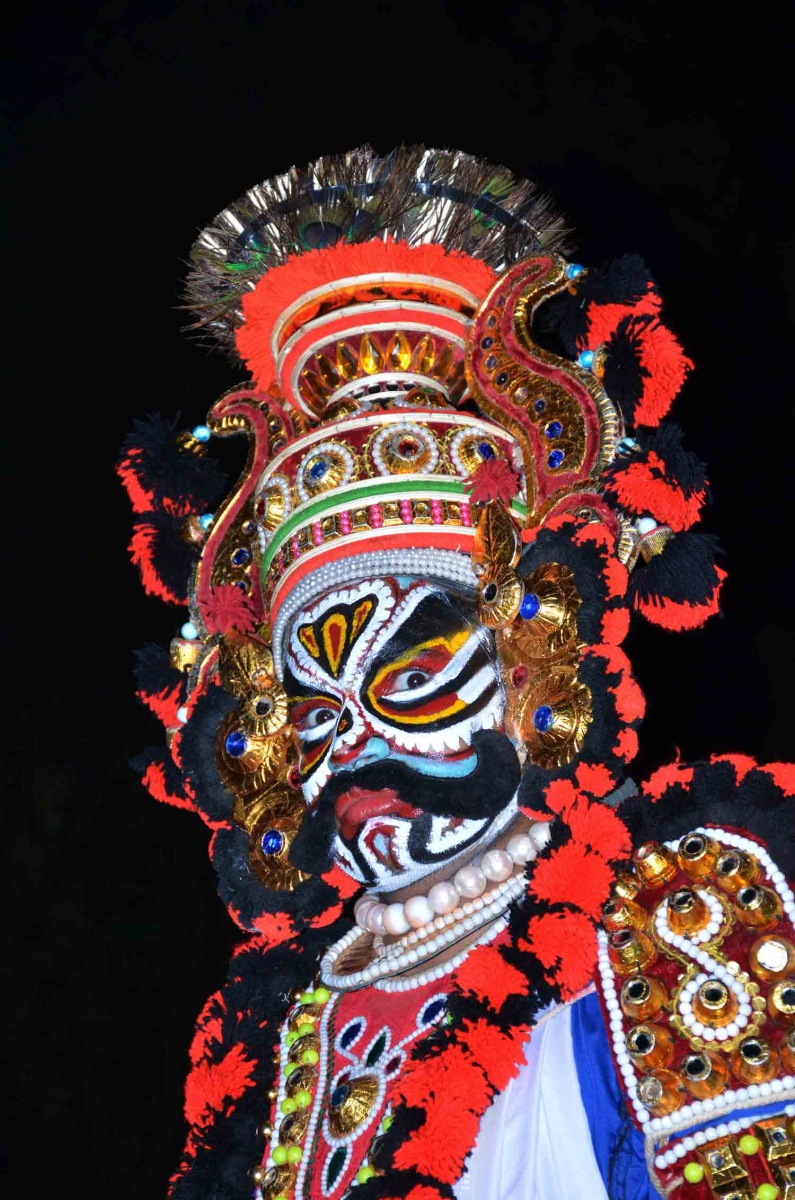
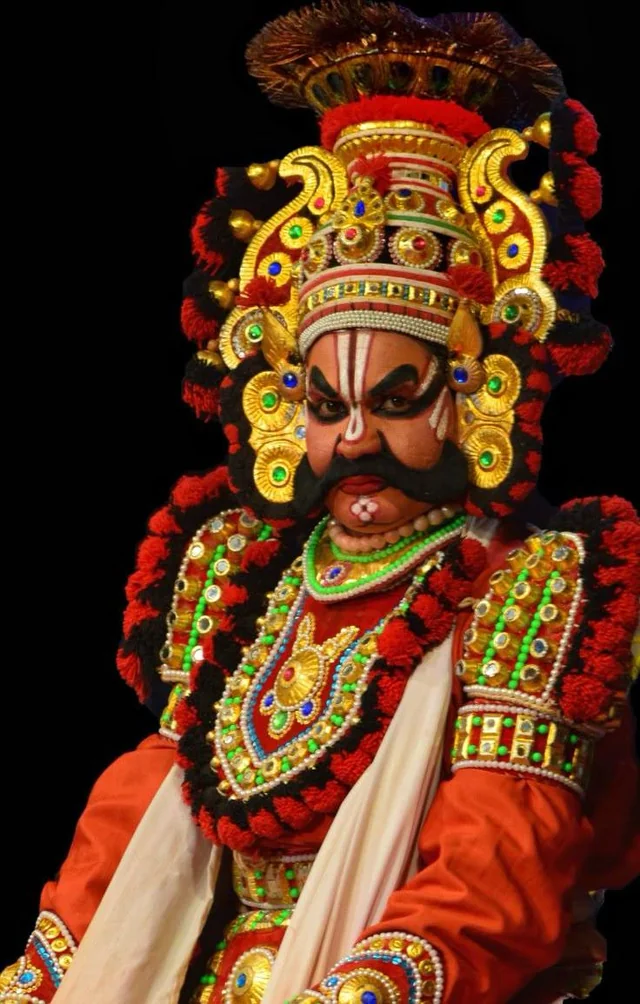
Faces of the night stage
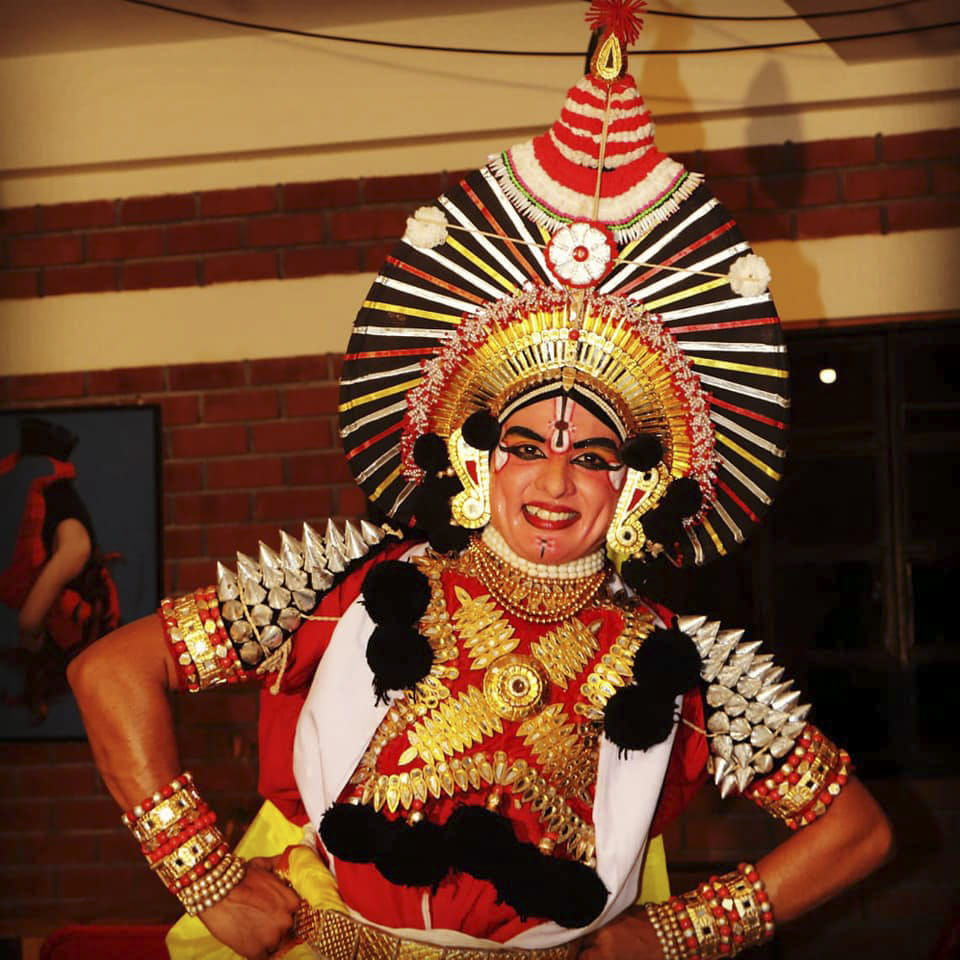
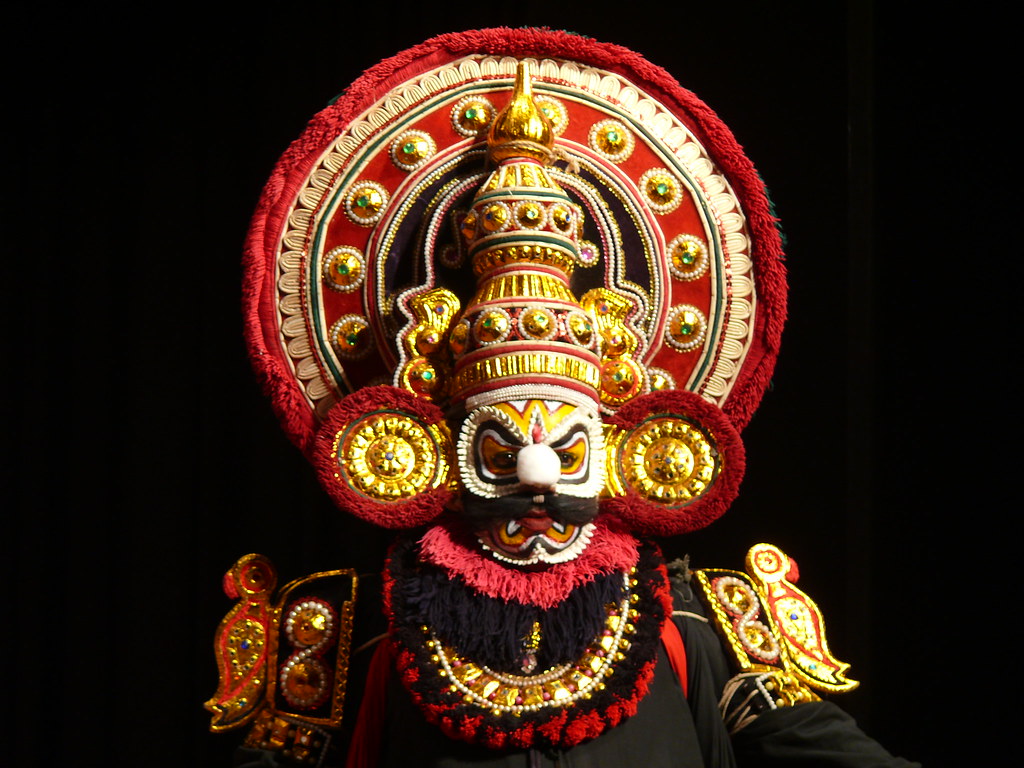
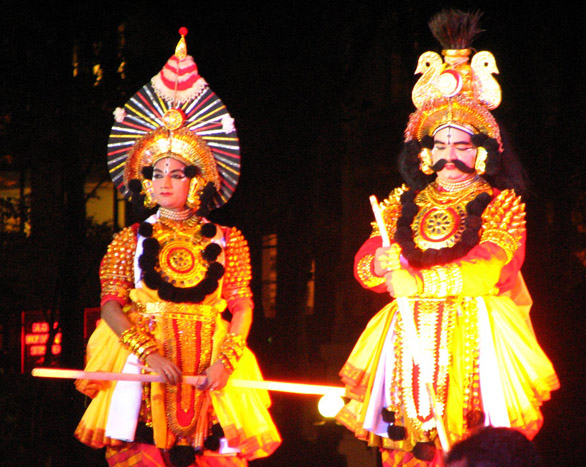
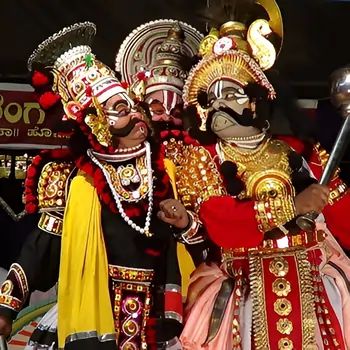
A living heritage, not a museum piece
The Keremane Idagunji Yakshagana Mandali, over a century old, is registered on UNESCO's Representative List of Intangible Cultural Heritage, among the first such recognitions for the art. Through performance, gurukula education and its "Play is Learning" school programme, it carries the principle of Education · Protection · Propagation to the next generation.
Explore further
References & notes
- Collected research articles on Yakshagana and coastal performing arts.
- Karnataka Tourism and Karnataka Yakshagana Academy cultural resources.
- Writings of Dr. K. Shivaram Karanth on Yakshagana and the coastal traditions.
- Documentation of the Badagutittu and Tenkutittu traditions; UNESCO ICH listing of the Keremane Idagunji Mandali.