Costume, Makeup & Characters
Painted faces, towering crowns and a language of colour.
Yakshagana is an art form of visual power. The costumes and face paintings of the performers are intertwined with the mythological themes they embody, so that, through colour and imagery alone, the inner state of a character is made visible to the audience: peace, courage, anger or wonder.
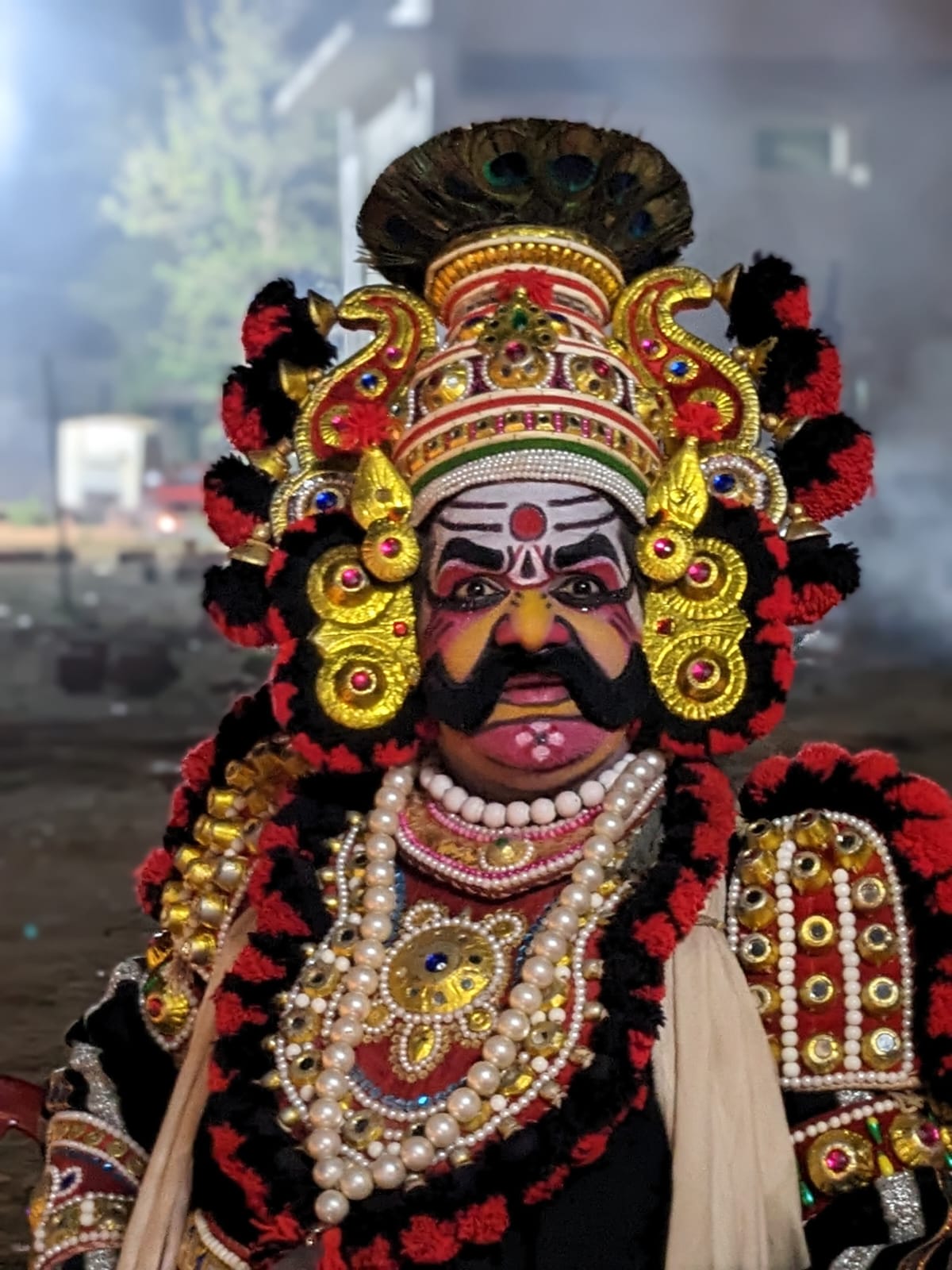
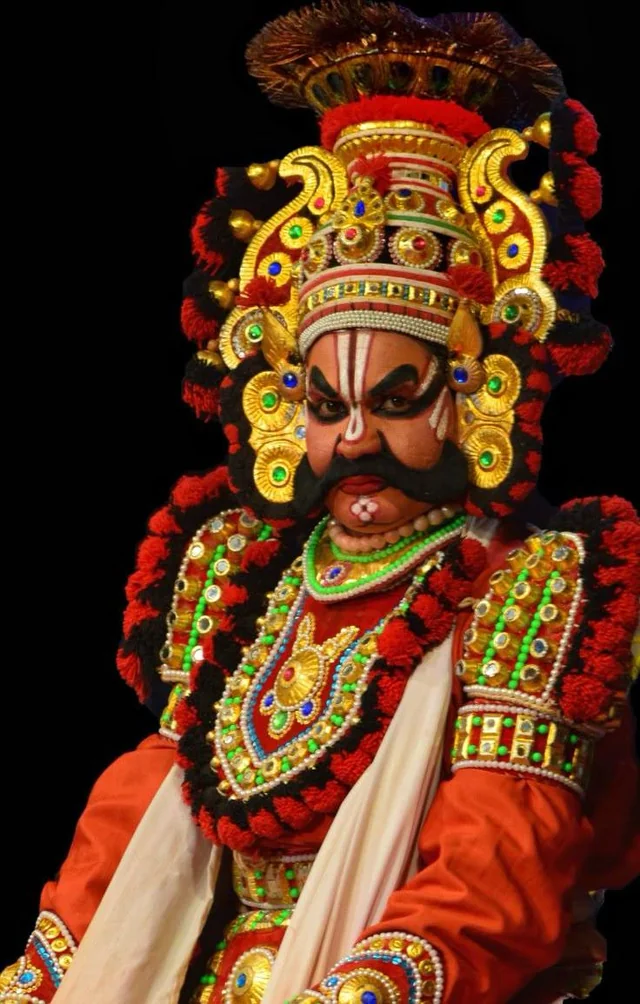
The face: foundation and chutti
Before a performance begins, artists apply a thick white foundation (safed menje) to the face and outline the cheekbones with chutti, fine borders built up from rice paste. The purpose of face painting is to communicate character at a glance: the fierce warrior, the steadfast hero, the enchanting beauty, or the cruel villain. Breath lines, ivory-white teeth outlines and shining silver accessories all complete the look.
The colour code
In the Tenkutittu style especially, three distinct colour sets distinguish human from divine and demonic characters. The colour a performer wears tells the audience who they are before a word is spoken.
Red & green
Worn by warriors and noble figures in the tradition of Vishnu, the heroic and the righteous.
Black
The mark of demonic character, the fearsome rakshasa roles that command the night stage.
Green & red
The palette of the female roles, softer, lighter, and worn with delicate ornament.
Crowns & ornament
Crowns (kirita) differ by character type. Heroes wear heart-shaped tiered crowns; kings and revered figures wear arc-shaped, ornamental designs; and the Bannada Vesha demon wears large metallic, branching headpieces that dominate the stage. Elaborate leg ornaments, long green wings or crown-shaped decorations studded with jewels, and gleaming ankle pieces complete the visual splendour.
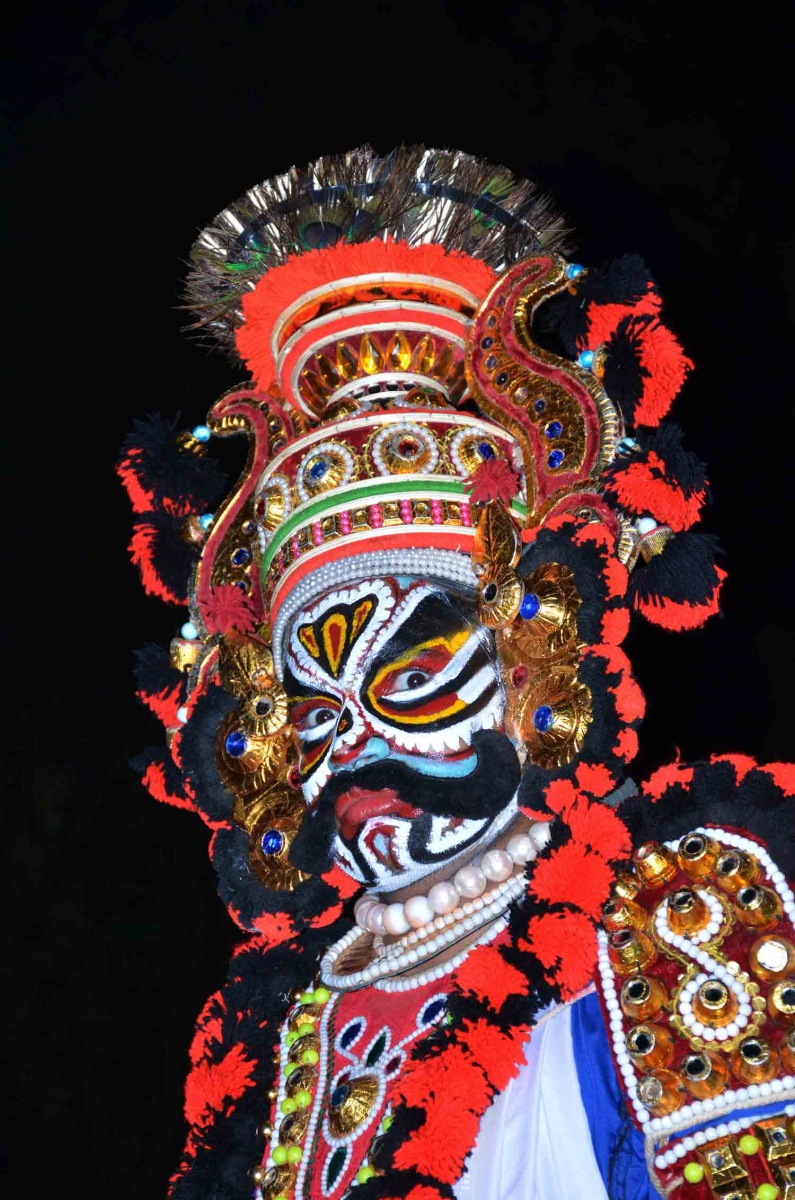
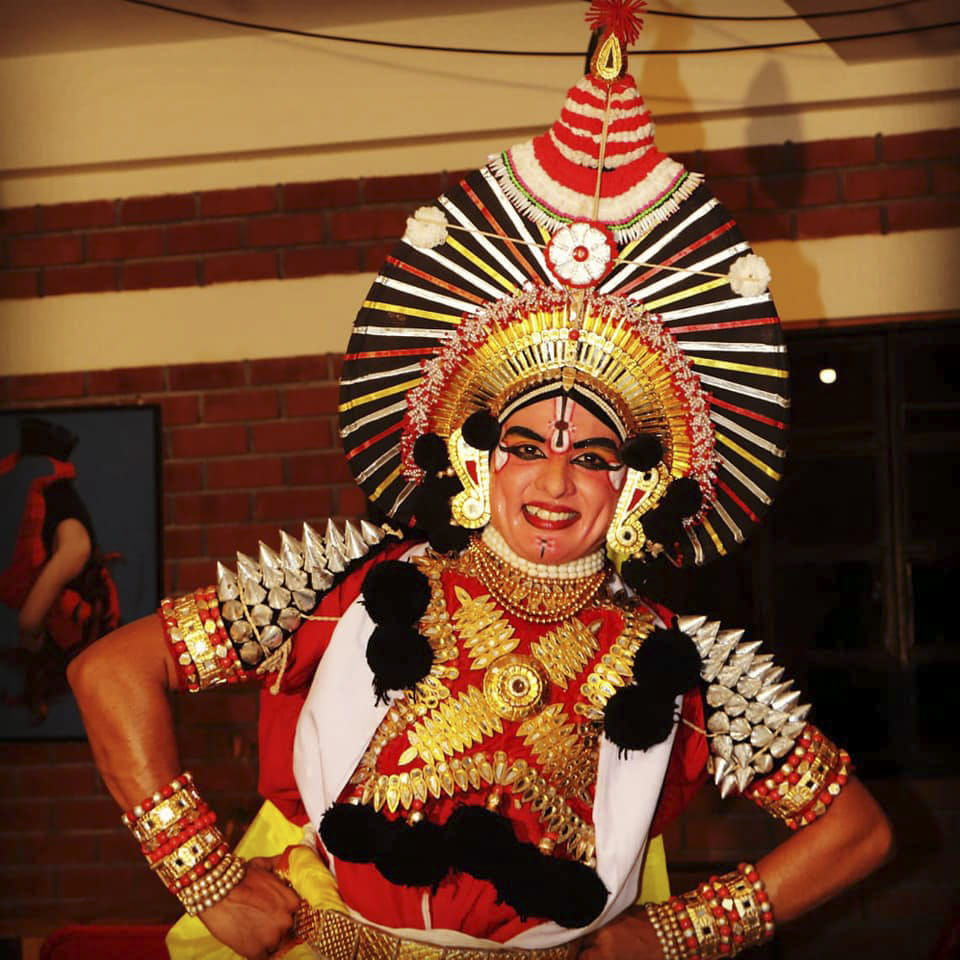
Stories & characters
Every Yakshagana story, a prasanga, draws from literature and develops its scenes dramatically. Narratives come from the Ramayana, Mahabharata, Bhagavata and other Puranas. A Ramayana prasanga might open with the birth events of Dasharatha; a Mahabharata episode might begin from the assembly of Dharmaraya. At the outset, the Raja proclaims the glory of his kingdom, answering the Bhagavata's narrative call through song.
As the prasanga unfolds, the opposing characters (demons, Hanuman, divine beings) make repeated dramatic entrances. The key Bannada Vesha enters with a fierce cry, and the spectacle of his movement beneath a giant painted headpiece is deeply engaging. In the southern style, a curtain tradition heightens such entries: the character hides behind a held cloth, then whirls out into full view.
Through costume and imagery alone, the inner emotions of a character (peace, courage, anger, wonder) are made visible to the audience.