Festivals of Kundapura
A blend of agriculture, spirituality, folklore and community participation.
Set along the Arabian Sea coast of Karnataka, Kundapura carries a cultural heritage shaped by centuries of agricultural traditions, temple customs, Daiva worship, ancestral practices and community celebration. While pan-Indian festivals like Deepavali, Ganesh Chaturthi and Navaratri are observed everywhere, Kundapura is distinguished by a unique set of regional festivals that reflect the identity of the coast, deeply connected with rivers, forests, paddy fields, temples and the spirit deities who guard them. These are not merely occasions for celebration; they are expressions of gratitude, devotion and social unity, a living heritage passed from ancestors to future generations.
Four strands of celebration
The festival life of Kundapura weaves together four enduring strands, the gratitude of the harvest, the awe of Daiva and serpent worship, the grandeur of the temple chariot, and the shared joy of the village fair. Three of these traditions have their own detailed articles on this encyclopedia.

Hosthu
The first-harvest festival, tying the new paddy ears at every doorway and offering the season's first rice before it is eaten.
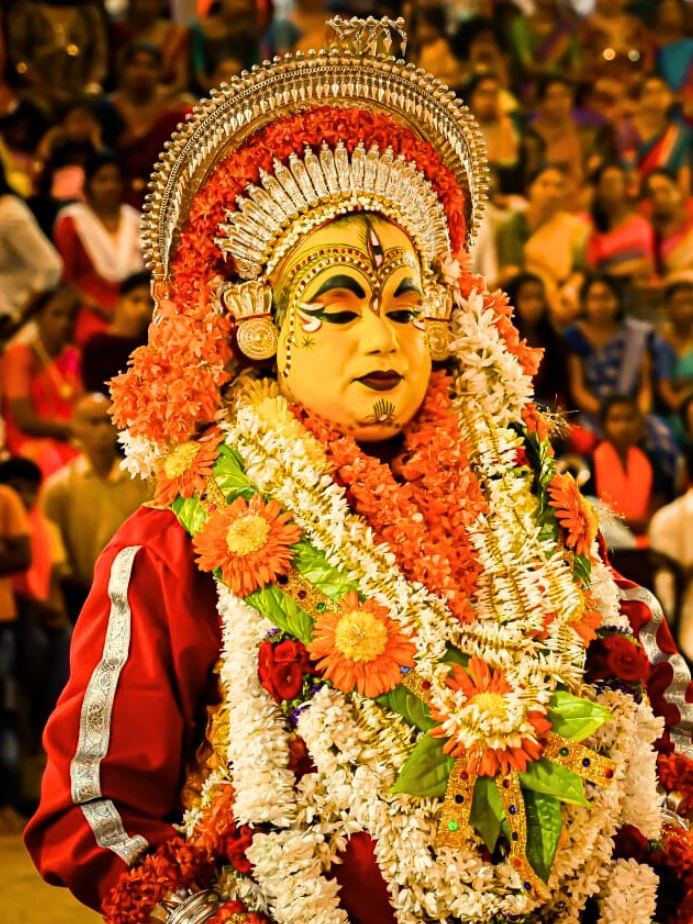
Bhoota Kola
The sacred night when guardian Daivas descend into a dancer to bless, to judge and to protect the village.
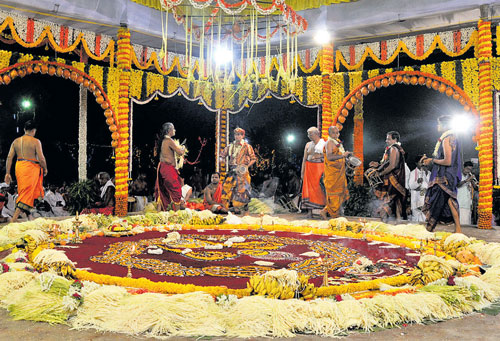
Naga Mandala
An ancient serpent rite drawn in natural colours, performed for fertility, family welfare and the removal of difficulties.
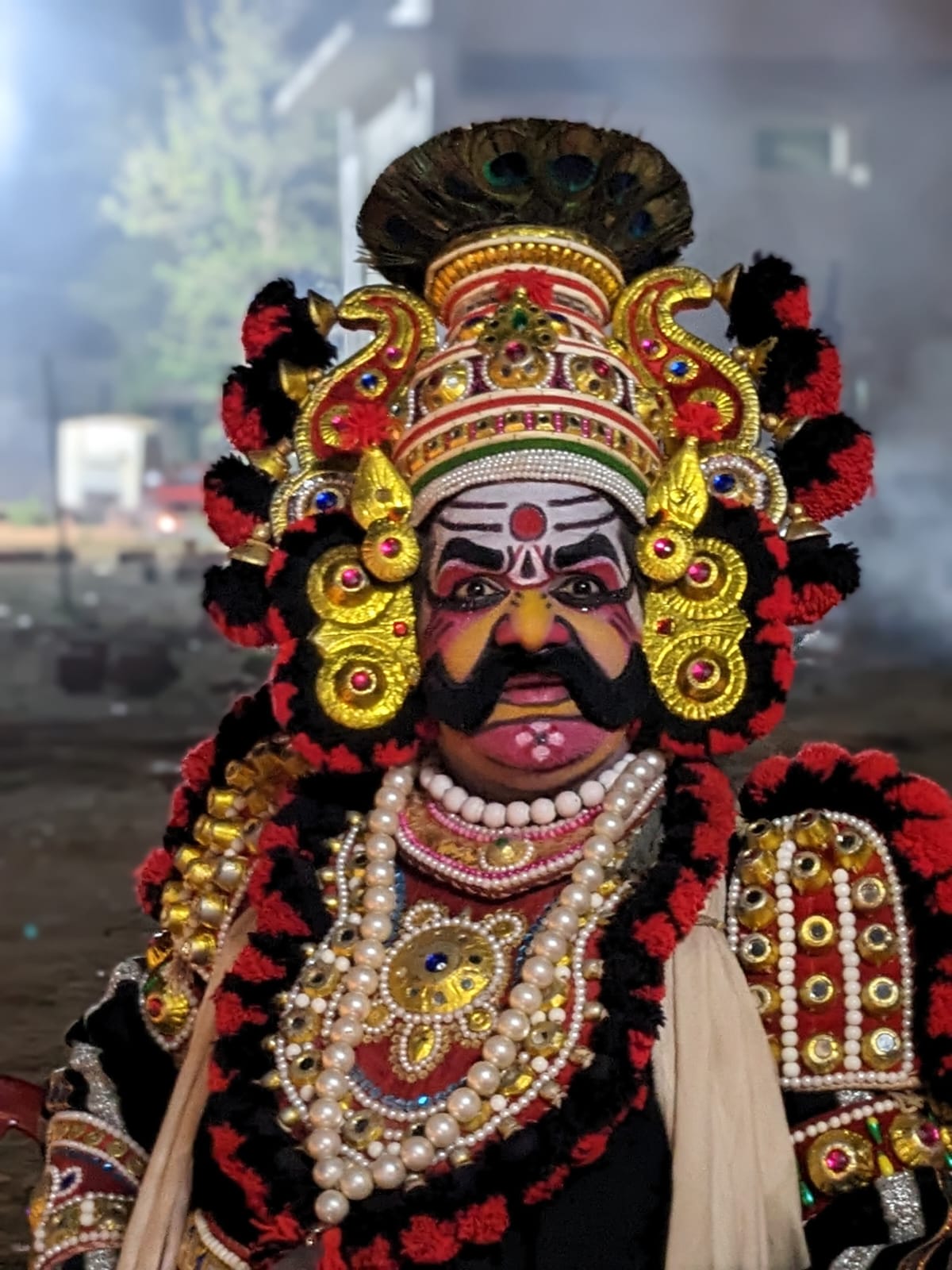
Yakshagana
The night-long dance-drama of the epics that travels village to village through the cool festival months.
Festivals of the harvest
For centuries, rice cultivation, coconut and arecanut formed the backbone of life in Kundapura, and the oldest festivals grew directly from the agricultural year, marking the soil, the rains and the collective labour of farming families.
Hosthu, the first harvest
Among the most important agricultural festivals is Hosthu (also Hosatu or Hosa Thene), the festival of the season's first paddy and a thanksgiving to the Earth and the divine forces believed to protect agriculture. Its central ritual is Kadiru Kattuvudu, in which freshly harvested paddy ears are brought home and tied at house entrances, the Tulasi Katte, family shrines, cattle sheds and temples as symbols of abundance. The new grain is cooked and offered to the family deities before it is eaten, in the new-rice feast of Hosa Akki Oota.
 Kadiru Kattuvudu, the tied paddy of Hosthu
Jakni, a summer tradition
Main article: Jakni
One of the most distinctive observances of the region, Jakni is celebrated chiefly in the summer months of April and May, combining Daiva worship, ancestral remembrance, family gatherings and seasonal food. Unlike public festivals, Jakni stays rooted in family and village custom. Its central act is the offering of food to Daivas and Ganas, the guardian spirits, often including chicken, rice preparations and coconut-based dishes prepared according to family tradition.
Jakni is also a time to remember deceased family members, with food prepared in their memory and relatives gathering to honour earlier generations, an act that strengthens family identity and continuity. Falling in the peak of the jackfruit season, it has its own table of seasonal delicacies.
| Jackfruit dish | What it is |
|---|---|
| Halasina Kadubu | Steamed jackfruit dumplings wrapped in leaves. |
| Halasina Appo | Sweet jackfruit fritters / paniyaram. |
| Jackfruit Payasa | A festive pudding made from ripe jackfruit. |
| Jackfruit Pundi | Rice-and-jackfruit dumplings of the coast. |
| Jackfruit Chips | Crisp fried chips, a perennial coastal favourite. |
Aati Amavasya, the monsoon observance
Main article: Aati Amavasya
Falling on the new-moon day of the rain month of Aati (Ashada), at the very peak of the monsoon, Aati Amavasya is less a festival of celebration than a day of health, reflection and remembrance. Its most famous custom is the morning drink of Aati Kashaya, a medicinal decoction made from the bark of the Aati tree and warming spices, taken to build immunity through the difficult, damp season. The day also brings the remembrance of ancestors through Tarpana, sacred bathing in rivers and temple tanks, and the colourful folk visits of Aati Kalenja, performers who go house to house singing blessings of protection and prosperity.
 Aati Kashaya, the medicinal decoction
Daiva and serpent worship
The coast's most powerful ritual festivals honour the Daivas, the guardian spirits believed to protect families, villages, forests and farmlands, and the serpent deities of the sacred groves. These traditions are central to Tulu and Kundapura culture.
Bhoota Kola and Nema
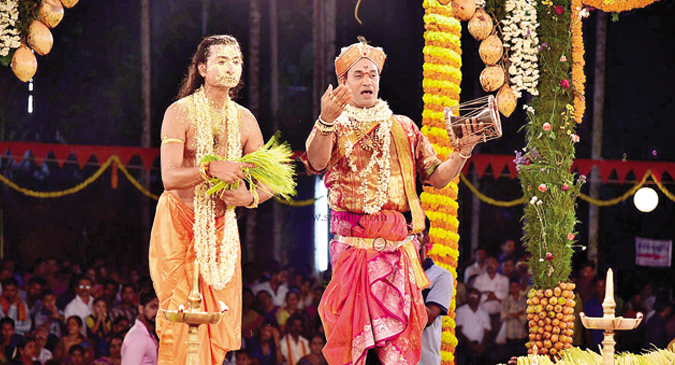
Bhoota Kola is among the most important ritual festivals in the cultural life of Kundapura. Unlike a conventional temple festival, it centres on the worship of local spirit deities. Preparations involve sacred offerings, Paddana recitations, ritual decoration, traditional music and full community participation. Its highlight comes when the Daiva is believed to manifest through the performer, and villagers seek blessings, guidance, justice and protection, a ritual that serves both spiritual and social functions.
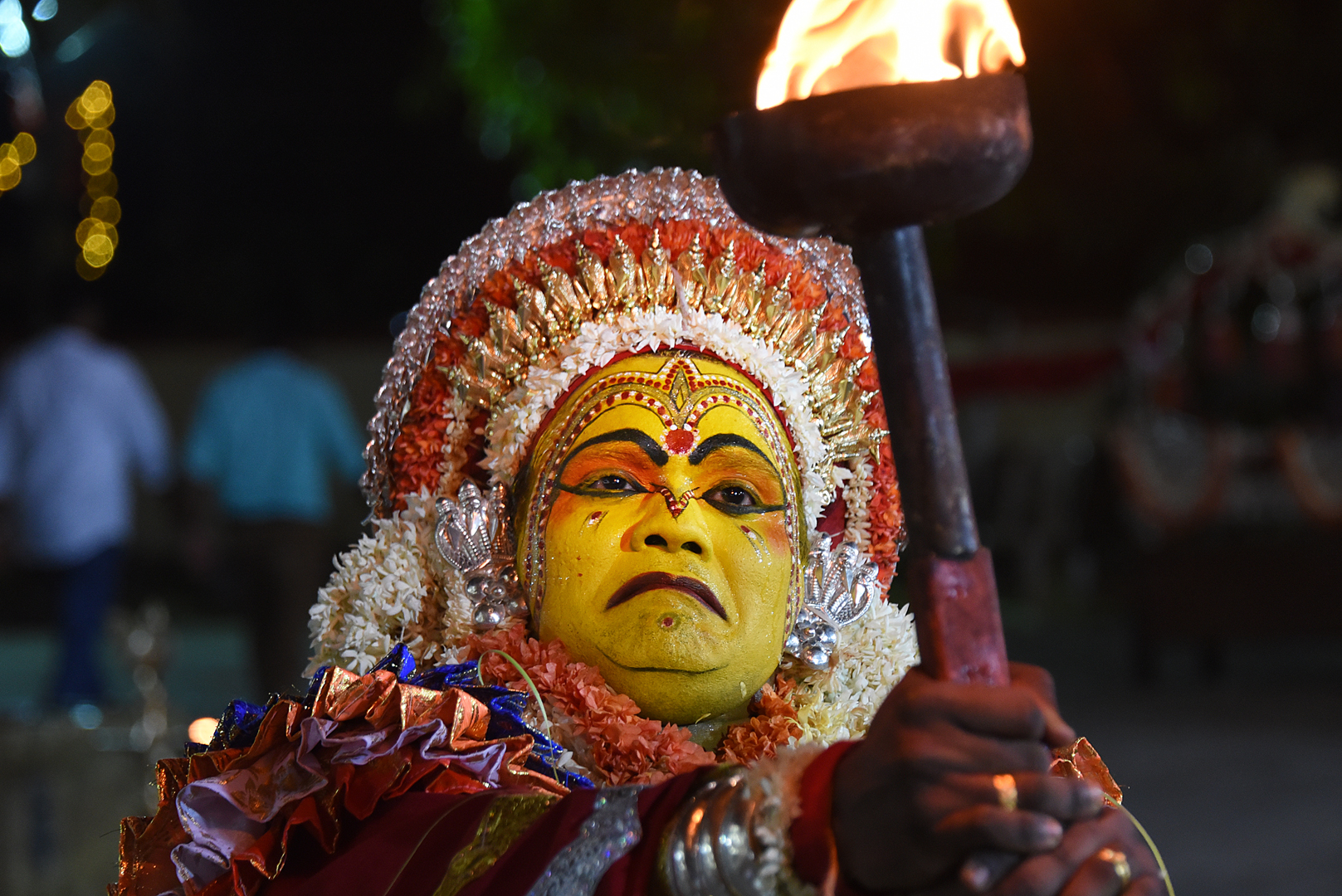
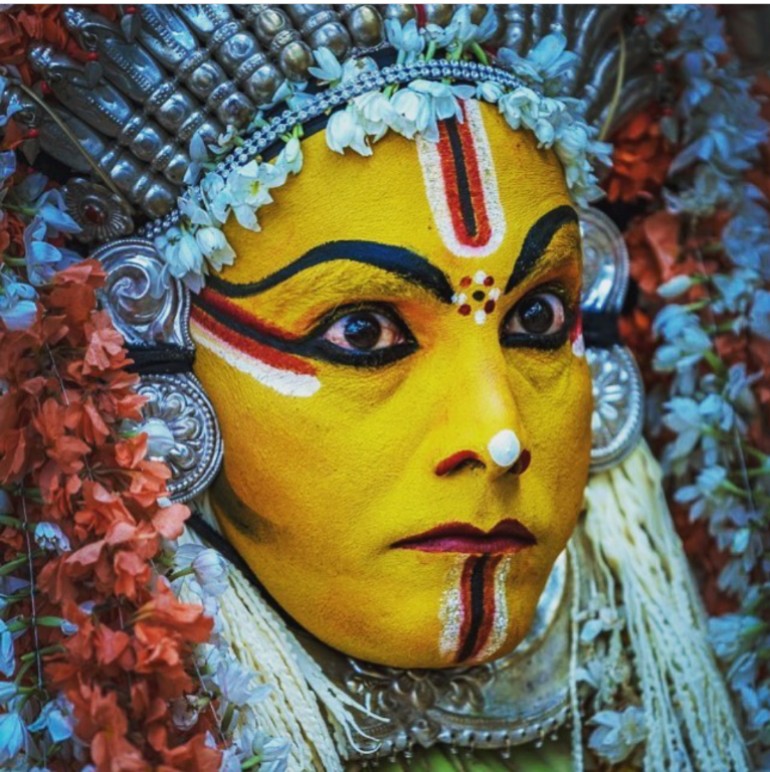
Closely associated with Bhoota Kola is Nema, the ritual of fulfilment. Families sponsor a Nema ceremony to fulfil vows, express gratitude, seek blessings or continue hereditary traditions. Elaborate and often continuing through the night, Nema remains one of the most respected cultural observances in Kundapura.
Naga Mandala, the serpent festival
Among the oldest ritual traditions of coastal Karnataka, Naga Mandala is dedicated to the serpent deities and reflects ancient beliefs connecting human life with nature and fertility. Its heart is the sacred Mandala, an intricate serpent design created on the ground in natural colours that serves as the ritual centre of the ceremony. Families perform Naga Mandala for family welfare, fertility, agricultural prosperity and the removal of difficulties.
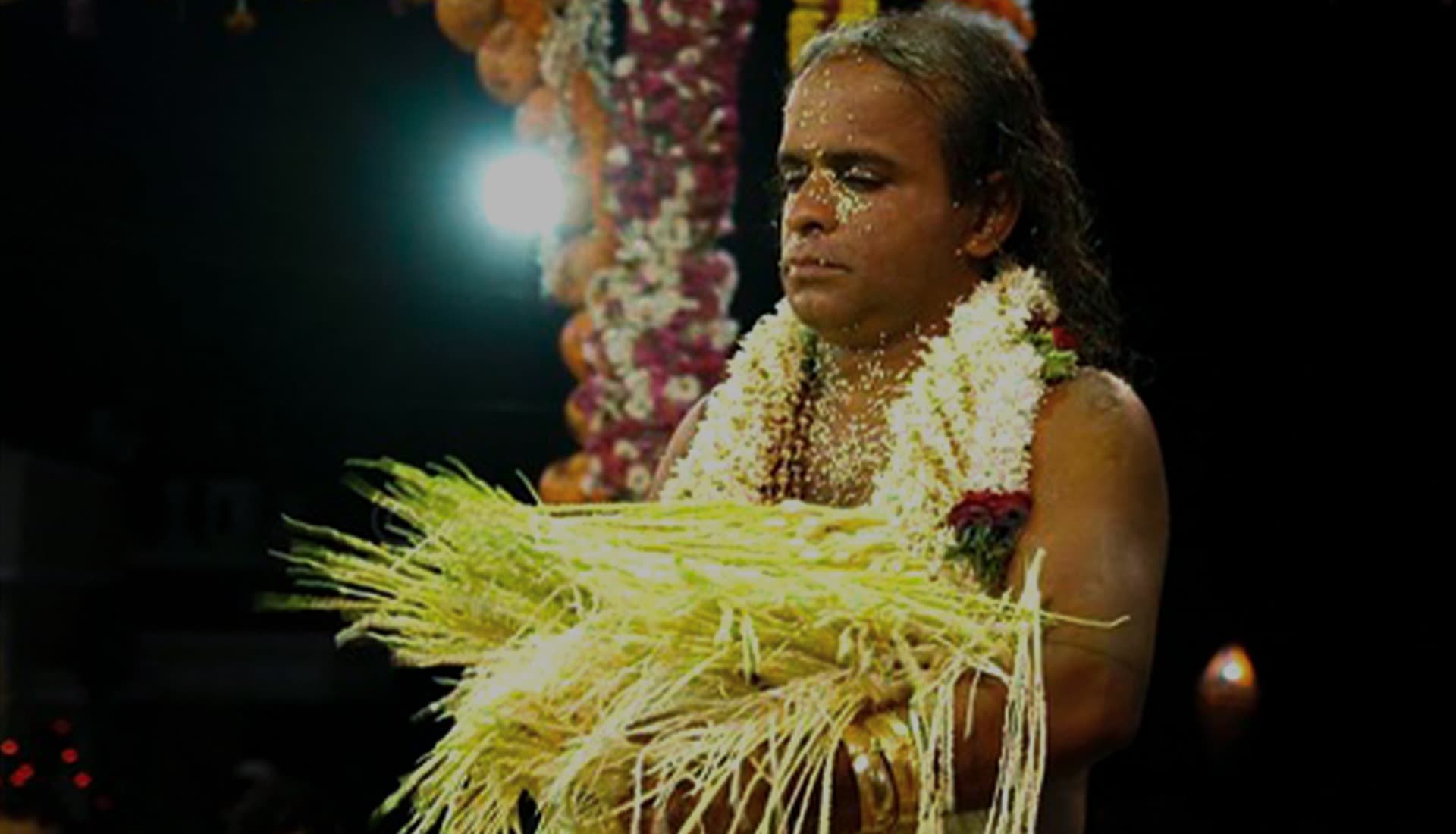 Naga Mandala, the serpent ritual
Temple chariot festivals
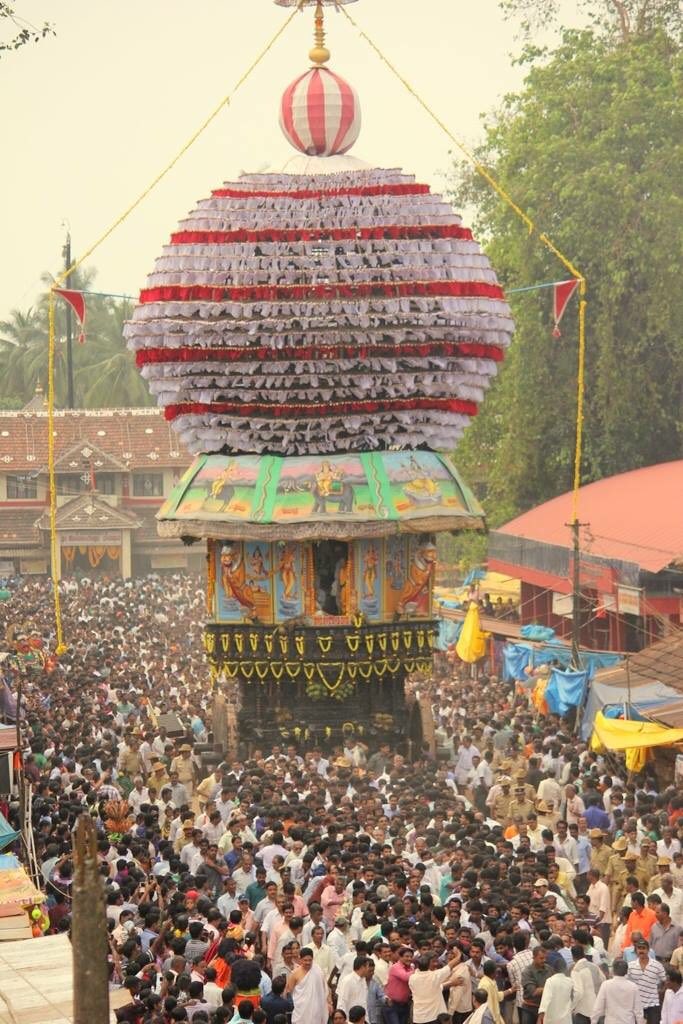
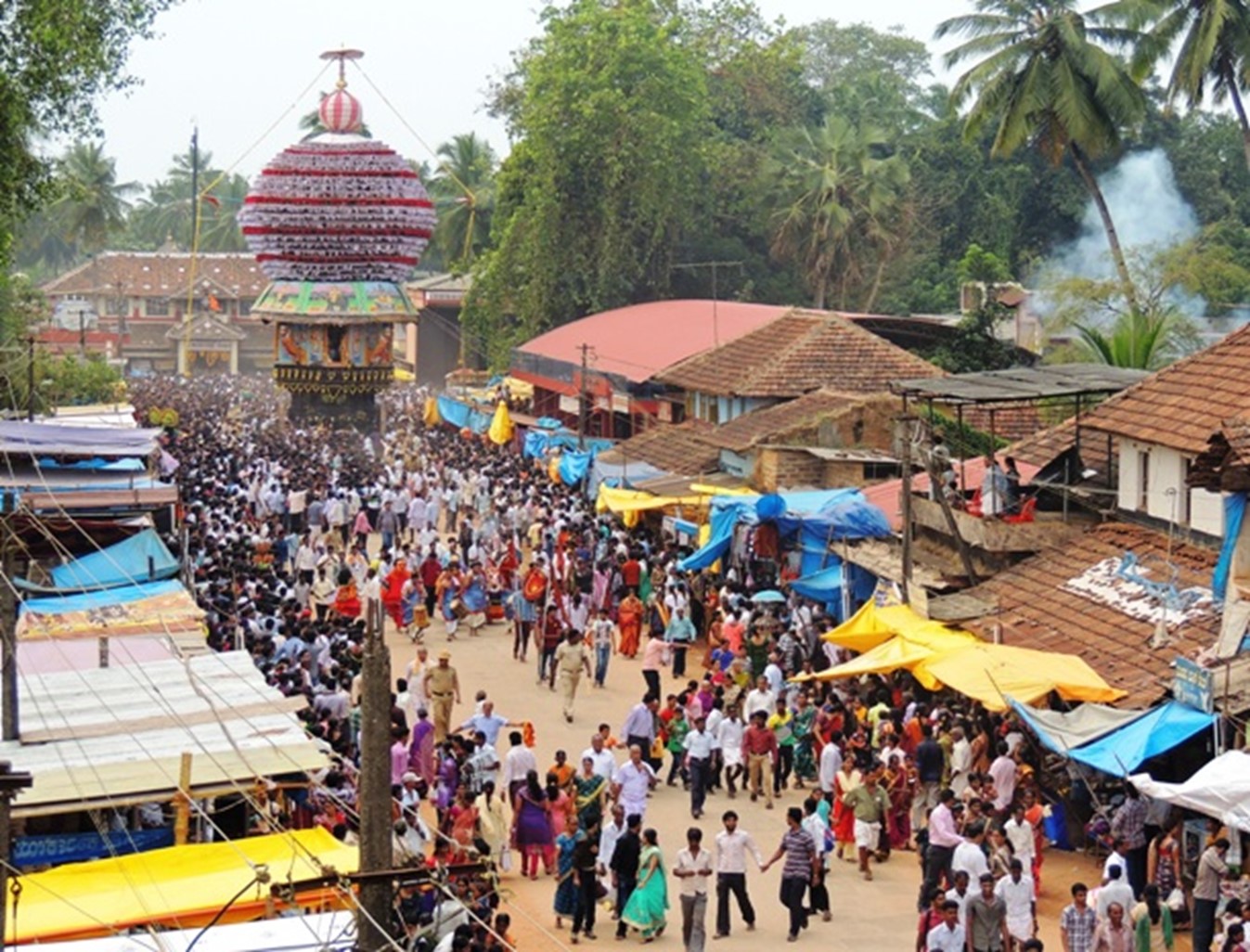
Every major temple in Kundapura celebrates an annual Rathotsava, when a decorated wooden chariot carrying the temple deity is pulled through the streets by hundreds of devotees. These car festivals draw thousands from across coastal Karnataka and combine religious ritual, cultural programmes, community feasts and traditional music.
| Rathotsava | Temple / deity |
|---|---|
| Kollur Mookambika | The Divine Mother, the coast's great Shakti pilgrimage. Temple → |
| Anegudde Vinayaka | The hilltop Ganapathi shrine at Kumbhashi. Temple → |
| Hattiangadi | The Siddhi Vinayaka temple on the Varahi river. |
| Shankaranarayana | The combined Shiva–Vishnu shrine, a Mukti Sthala. |
| Koteshwara | The ancient Kotilingeshwara, famed for its Kodi Habba car festival. |
| Kamalashile | The Brahmi Durgaparameshwari temple on the Kubja river. Temple → |
Kamalashile Jatra
The annual festival of the Sri Brahmi Durgaparameshwari Temple at Kamalashile is among the most important religious celebrations in Kundapura, known for its special poojas, processions, devotional gatherings and cultural programmes. The temple's connection with the Kubja River lends the celebration a unique significance.
Maranakatte annual festival
The Maranakatte temple complex celebrates annual festivals dedicated to Sri Janardhana, Sri Brahmi Durgaparameshwari and Sri Brahmalingeshwara. Drawing devotees from across coastal Karnataka, the celebration emphasises the unity of the Shaiva, Vaishnava and Shakta traditions in a single sacred landscape.
Anegudde Ganesh Chaturthi
Although Ganesh Chaturthi is celebrated across India, the observance at Anegudde carries a unique local significance. Thousands of devotees visit during the festival for special rituals including Maha Poojas, Ganahoma, cultural events and community meals, reinforcing Anegudde's status as one of Karnataka's foremost Ganapathi pilgrimage centres.
The chariot is the village turned inside out.
For a few days each year the whole community, across caste and trade, gathers at the temple street to pull the rope, share a meal and watch the deity ride out among the people, the social heart of the coastal calendar.
Community and village celebrations
Beyond the great temples, the festival year is sustained by celebrations rooted in village life itself, in agriculture, livestock, folk performance and the simple gathering of neighbours.
Kodi Habba, the festival of unity
Deeply rooted in the agricultural and rural traditions of the coast, Kodi Habba represents the collective spirit of village life. Unlike festivals centred solely on temples, it combines community participation, agricultural heritage, livestock culture and social unity. Historically observed after important agricultural tasks were completed, it allowed communities to gather and celebrate the fruits of their shared labour, acknowledging the completion of the harvest, the importance of livestock, rural prosperity and gratitude toward nature.
Its most remarkable feature is the active participation of the entire community, family gatherings, village meetings, traditional games, cultural activities and shared meals. Food plays a central role, with rice-based preparations, coconut dishes, seasonal vegetables and traditional sweets, while folk songs, music, storytelling and competitions preserve local traditions and pass them between generations. Beyond its festive character, Kodi Habba strengthens family relationships, community harmony, cultural identity and village cooperation, and continues to be celebrated across the villages of Kundapura even as certain practices evolve.
Rural sports, Kambala & Koli Pade
Two traditional rural sports grew from the agrarian life of the coast and still gather the villages. Kambala, the buffalo race run through water-filled paddy fields, combines agriculture, community identity, rural pride and traditional sport, highlighting the central importance of farming in coastal society. Koli Pade (Kori Katta), the traditional village contest tied to temple festivals and Daiva worship, was long a social gathering of rural life, though today it is the subject of legal and ethical debate.
Village Jatras and the Yakshagana season
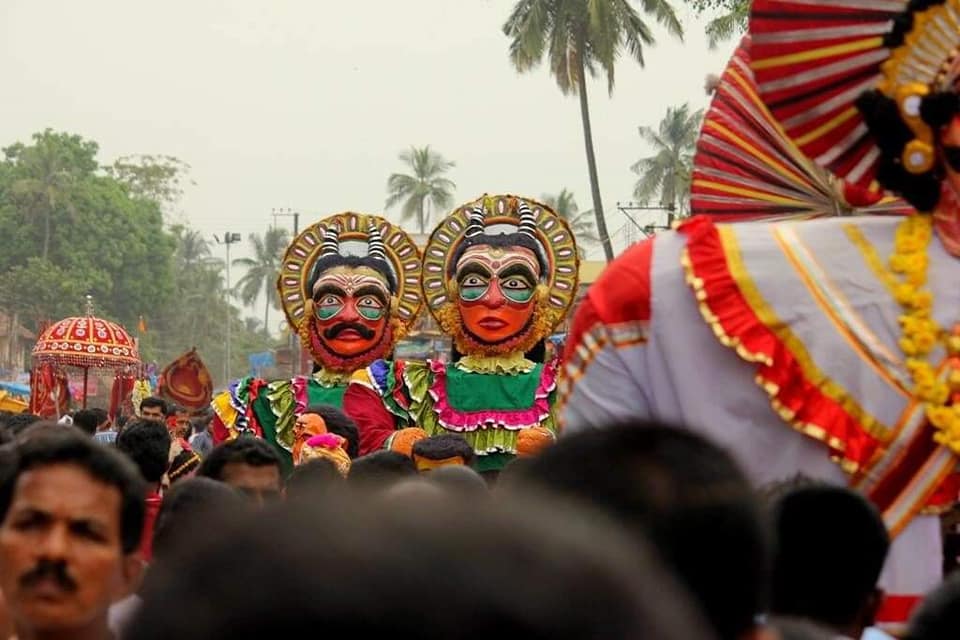
Nearly every village in Kundapura celebrates an annual Jatra tied to its local temple and Daivas, with religious ceremonies, processions, folk performances and community feasts, one of the most important social gatherings in village life. Festival periods across the taluk frequently feature Yakshagana, the overnight dance-drama depicting stories from the Ramayana, Mahabharata and Bhagavata, which combines entertainment with religious education and cultural preservation.
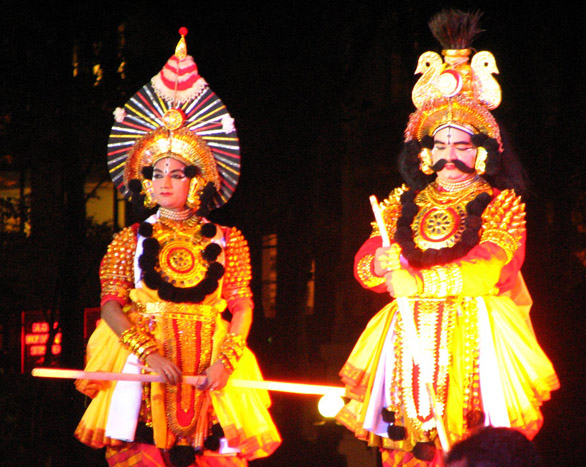 Yakshagana, the festival-season theatre
A coastal kite festival
In recent years the broad open beaches of the coast have hosted colourful kite festivals, where giant inflatable kites fill the sky above the sand, a modern addition to the seasonal calendar that draws families and visitors to the shore during the dry winter months.
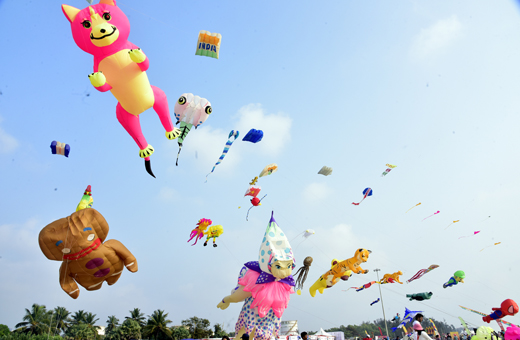 Giant kites over the coast
The festival year
Though dates shift with the lunar calendar and village custom, the celebrations follow the rhythm of the coastal seasons, from the heat of summer to the cool, dry months that crowd the calendar with chariots and theatre.
Jakni & the jackfruit season
Summer brings Jakni, with Daiva offerings, ancestral remembrance and the seasonal jackfruit delicacies.
Aati Amavasya
The monsoon new moon, with the medicinal Aati Kashaya, ancestor remembrance and the Aati Kalenja folk visits.
Ganesh Chaturthi
Grand celebrations at Anegudde with Maha Poojas, Ganahoma and community meals.
Navaratri & Hosthu
The Divine Mother is worshipped at Kollur while villages tie the new paddy ears for the first harvest.
Rathotsavas & Kodi Habba
The temple chariot season opens, and the agrarian community festivals gather the villages.
Bhoota Kola, Jatras & Yakshagana
The cool dry months fill with spirit rituals, village fairs, night-long theatre and the coastal kite festivals.
Gallery
See also
References & notes
- Compiled report: "Regional Festivals of Kundapura, the Living Celebrations of Coastal Karnataka."
- Compiled report: "Kodi Habba, the Festival of Unity, Tradition and Community in Kundapura."
- Agricultural, temple and folklore traditions of coastal Karnataka and Tulu Nadu.
Photographs were contributed by residents documenting the festivals, and are used for educational and cultural reference, not for commercial purposes. Festival dates follow the lunar calendar and local custom, and vary from village to village.