The Culture of Kundapura
A living heritage woven from language, faith, art, food and community.
Kundapura, in the northern part of Udupi district, possesses a rich and distinctive cultural identity that has evolved over centuries. Set along the Arabian Sea coast and shaped by rivers, forests, agriculture, trade and religion, it has developed a unique cultural landscape that reflects the traditions of coastal Karnataka while keeping its own local character. The result is a harmonious blend of language, customs, festivals, performing arts, cuisine, traditional occupations, family values, folklore and religious practice, deeply rooted in community life and thriving still amid rapid modernization.
What makes Kundapura culturally significant is not merely the preservation of ancient traditions, but the way those traditions continue to shape everyday life, from the language spoken in homes to the food served at festivals, from Yakshagana performances that last through the night to the vibrant celebrations of temple fairs.
The living traditions
Three traditions above all give the culture of Kundapura its distinctive voice, its theatre, its spirit worship and its harvest festival. Each has its own dedicated article.
Yakshagana
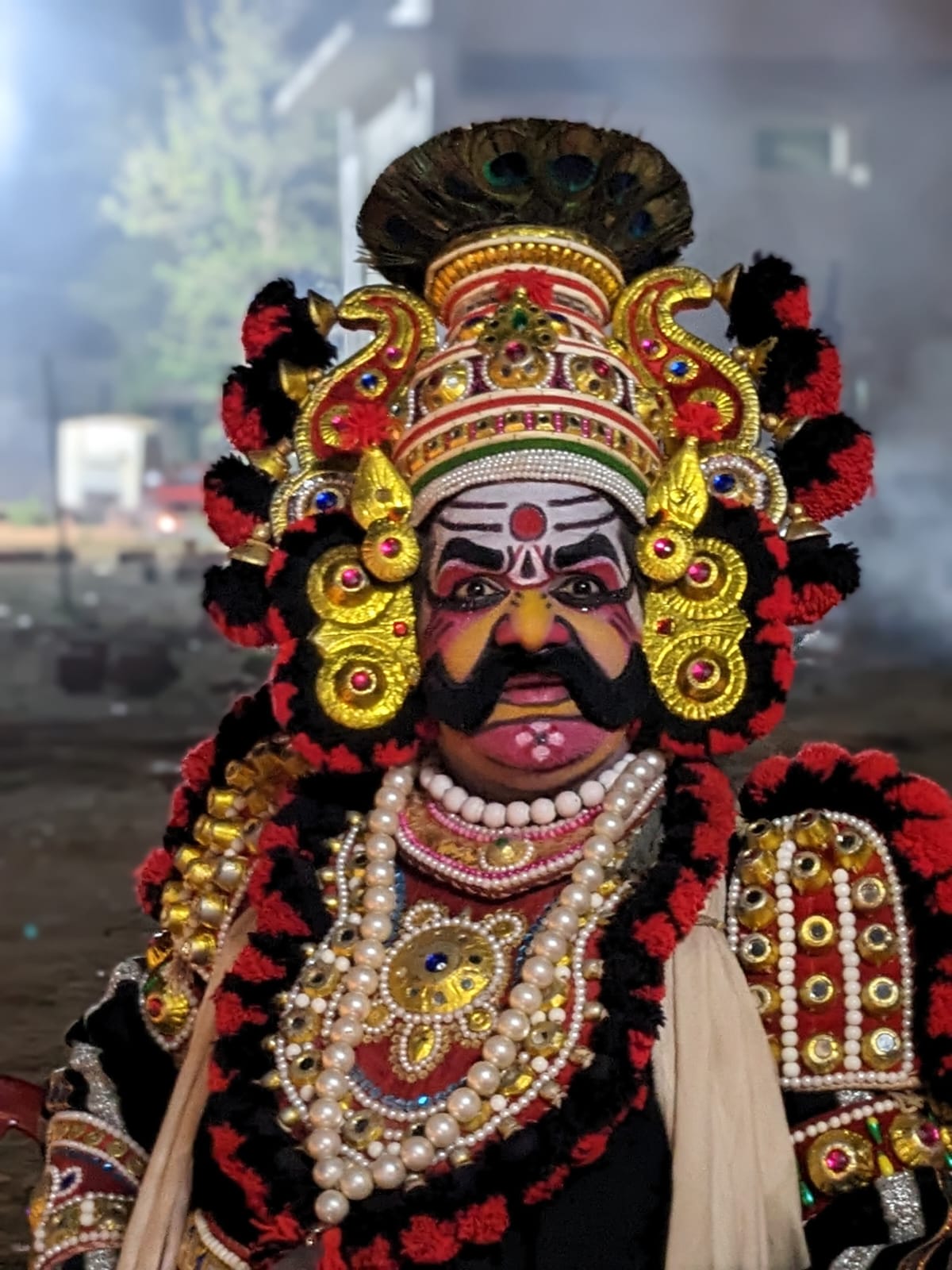
The night-long dance-drama of music, dance, towering crowns and improvised debate, drawn from the epics and the Bhagavata.
Explore the portal →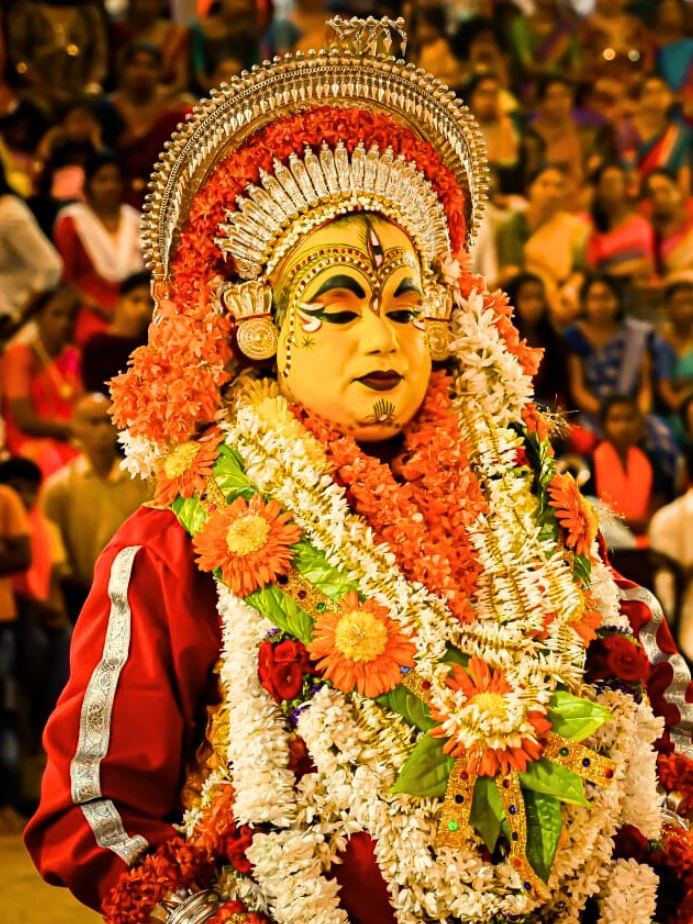
Bhoota Kola
Daiva Nema, the sacred night when guardian spirits descend into a dancer to bless, to judge and to be remembered.
Read the article →
Hosthu
The first-harvest festival of gratitude, tying the new paddy ears, offering the first rice and the feast of Hosa Akki Oota.
Read the article →Kundapra Kannada, the language of the region
One of the most distinctive aspects of Kundapura's culture is its unique dialect, Kundapra Kannada (Kundagannada). It differs significantly from standard Kannada in pronunciation, vocabulary and sentence structure, and many of its words and expressions are unique to the region, preserved through generations. Marked by a distinct pronunciation, coastal linguistic influences, an informal conversational style and rich idiomatic expressions, the dialect is an important marker of regional identity and is still widely spoken in homes, markets and social gatherings. Alongside it, Konkani, Tulu and Beary are spoken by different communities, reflecting the coast's layered history of trade and migration. Language here is more than communication. It is an expression of cultural belonging.
Family and community values
Traditional family values remain central to Kundapura culture. Families maintain close relationships across generations, and respect for elders, hospitality toward guests and mutual support among relatives are deeply ingrained. Community life matters equally: villages and neighbourhoods come together for religious events, festivals, cultural programmes, community feasts and social initiatives, and this sense of collective responsibility remains one of the defining features of Kundapura society.
Traditional attire
Traditional clothing plays an important role during festivals, ceremonies and religious events, most visible at temple festivals, weddings and cultural celebrations.
| Traditional attire | |
|---|---|
| Men | Panche (dhoti), shirt and angavastra, with traditional turbans on special occasions. |
| Women | Sarees with traditional jewelry and floral decorations; silk garments during festivals. |
Temple-centred culture
Religious tradition forms a major component of Kundapura's identity, and temples serve not only as places of worship but as centres of social and cultural activity, bringing together people of different backgrounds. Important cultural activities tied to temples include Rathotsavas (car festivals), bhajans and devotional music, cultural performances, community feasts and religious discourses, events that preserve tradition and strengthen social bonds.
Yakshagana, the cultural soul
Main article: Yakshagana
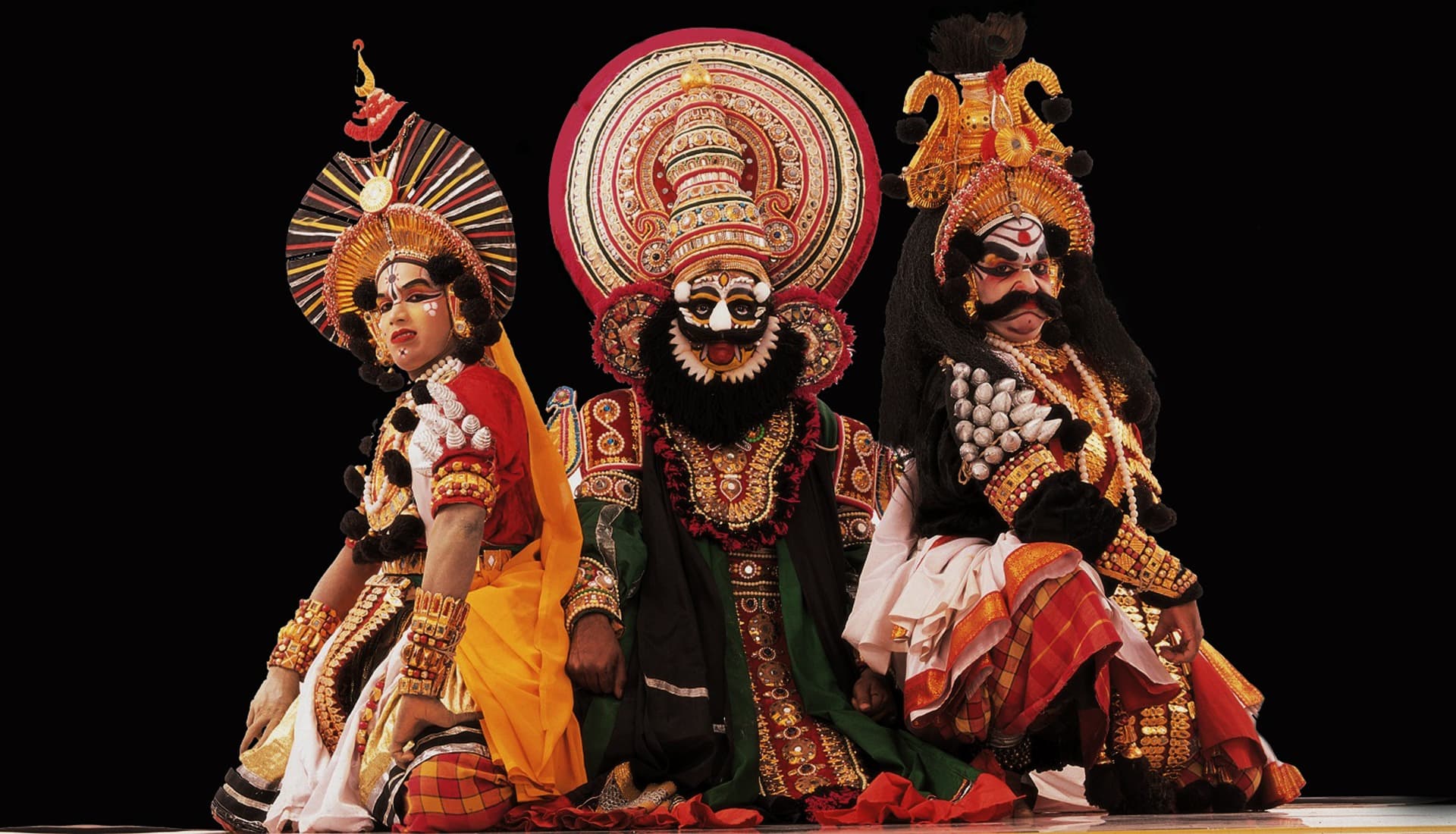
No account of Kundapura's culture is complete without Yakshagana, the traditional dance-drama that combines music, dance, acting, storytelling, costume design and religious themes. An integral part of the region's heritage for centuries, its performances depict stories from the Ramayana, Mahabharata, Bhagavata Purana and local legend, often continuing through the night before audiences of all ages. The elaborate costumes, colourful makeup, energetic movement and powerful dialogue make it one of the most celebrated traditions of the coast.
 Yakshagana
Bhoota Kola and spirit worship
Main article: Bhoota Kola
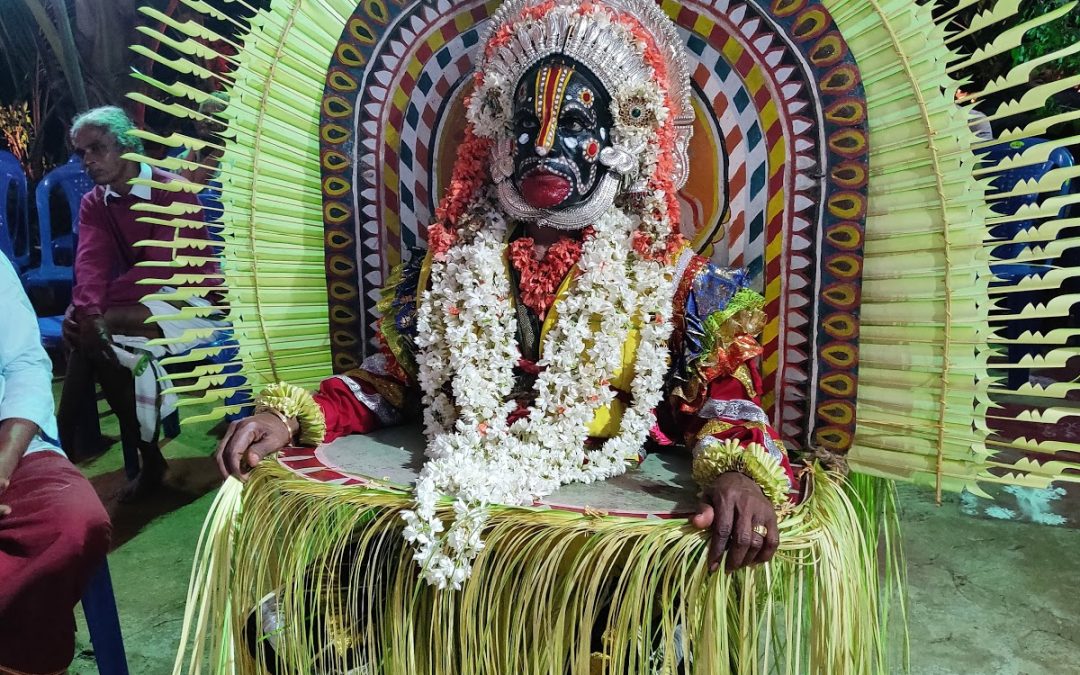
Bhoota Kola (Daiva Nema) (the ritual invocation of local guardian spirits, the Daivas, through possessed dance) runs as a parallel and equally respected tradition alongside temple Hinduism. At a Daivasthana or sacred grove, amid drums, fire and the recitation of the Paddana oral epics, the Daiva is believed to enter the performer to bless devotees, resolve disputes and deliver judgments. Closely related is Naga Mandala (serpent worship), described below.
Naga Mandala and serpent worship
Main article: Naga Mandala
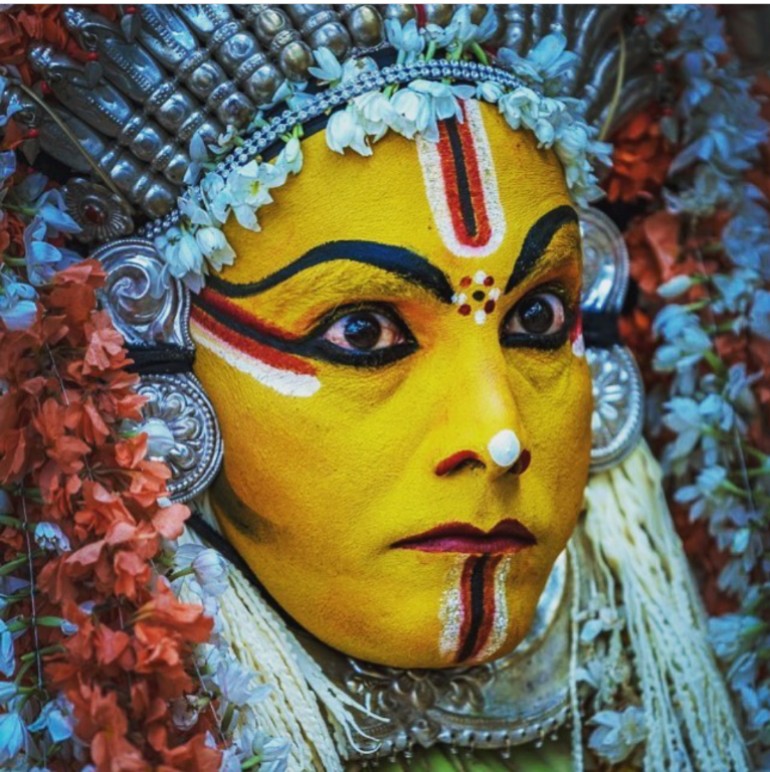
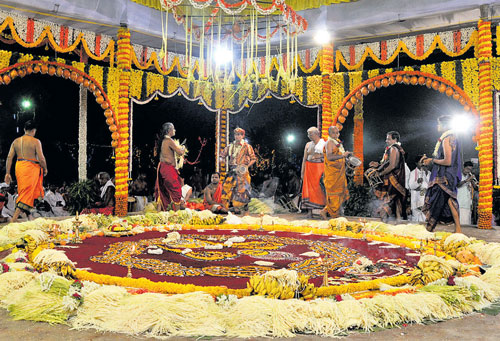
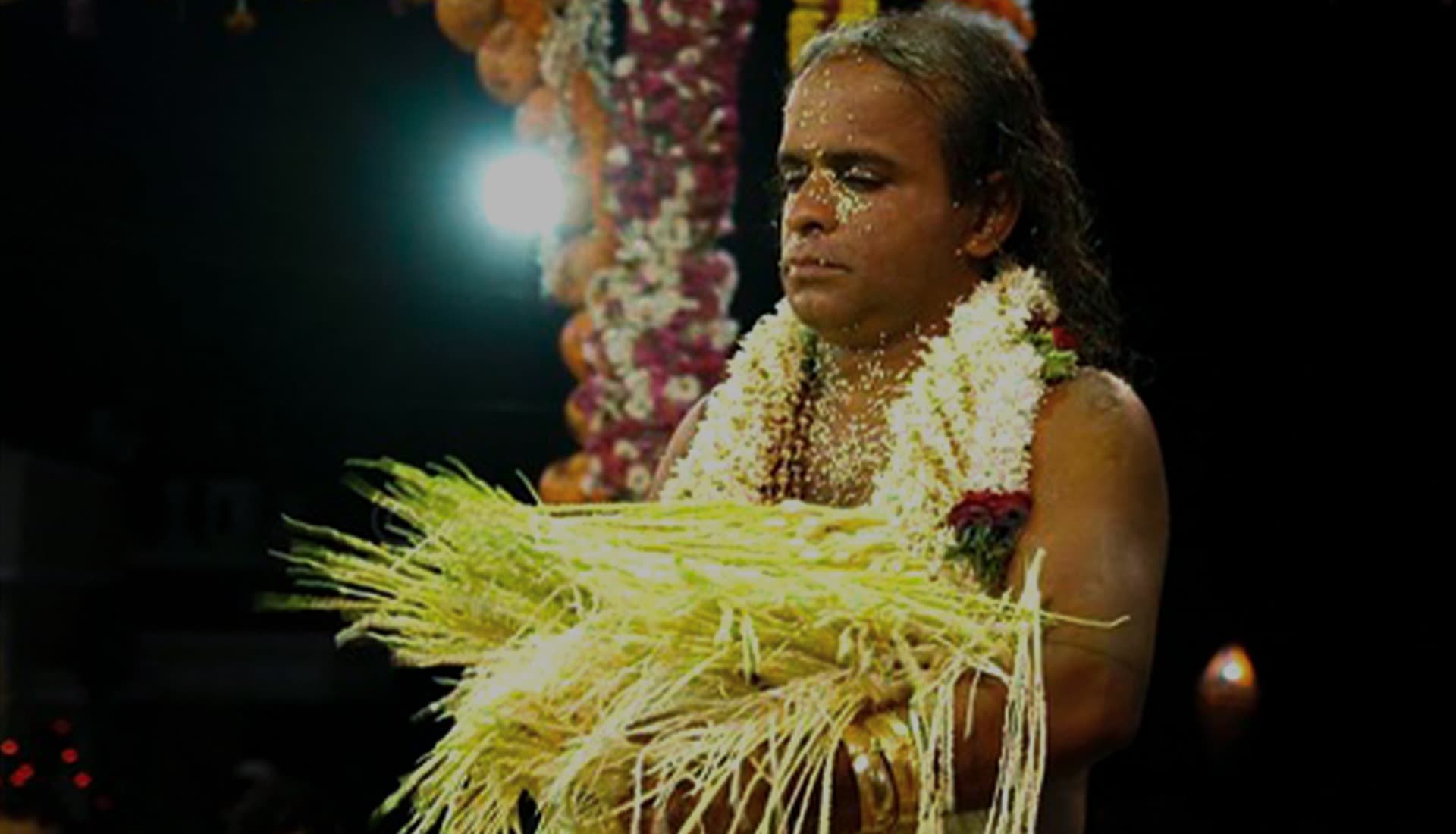
Among the most ancient traditions of the coast is Naga Mandala, the sacred worship of serpent deities, practised in coastal Karnataka for thousands of years. The Nagas are revered as divine guardians of land, water, forests and family lineages, associated with fertility, prosperity and protection, and many households keep a sacred serpent grove, a Nagabana. The ritual's most striking feature is the elaborate ground Mandala: skilled artists draw intricate, interwoven serpent forms in natural coloured powders, a work of several hours regarded as a sacred offering in itself. Performed through the night until dawn, the rite combines music, chanting and dance, with the Naga Patri embodying the serpent deity in a state of divine inspiration. By protecting the Nagabana groves, the tradition also safeguarded biodiversity long before modern conservation, a vivid example of Kundapura's bond between spirituality and nature.
Folk traditions and oral heritage
Kundapura has a rich tradition of folklore and oral storytelling, with stories passed from one generation to the next through folk tales, legends, songs, ritual narratives and community storytelling. These traditions preserve local history, cultural values and collective memory, often reflecting themes of courage, devotion, morality, nature and community harmony, the Paddanas of Bhoota Kola being among the most important of all.
Music and devotional traditions
Music occupies an important place in the region's culture, with devotional forms performed at temple festivals, religious ceremonies and community gatherings. Traditional instruments include the chende and maddale (the drums central to Yakshagana and ritual), alongside the harmonium and cymbals; bhajans and devotional songs remain widely practised and loved.
Huli Vesha, the tiger dance
Main article: Huli Vesha
The most colourful and energetic folk performance of the coast is Huli Vesha, the “tiger costume” dance. Performers paint their entire bodies in vivid tiger stripes, a transformation that can take several hours, and dance through streets and temple precincts to the pounding rhythm of the chende and dollu, leaping, stalking and pouncing in imitation of the tiger. Most strongly associated with the Krishna Janmashtami celebrations, it began as a devotional offering and has become a beloved symbol of the spirit, energy and artistic heritage of Kundapura, drawing children, families and visitors alike.
 Huli Vesha, the tiger dance
Traditional rural sports
Among the oldest community traditions of the coast are two rural sports that grew directly from its agrarian life, the buffalo race of Kambala and the village contest of Koli Pade (Kori Katta). Both originated in the farming society of Tulunadu and evolved over centuries as community events that combined celebration, competition, social interaction and cultural identity, closely tied to village life, agriculture, temple festivals and seasonal celebration. Viewed not merely as sport but as symbols of heritage, pride and ancestral custom, each now has its own dedicated article.

Kambala
The spectacular buffalo race run through water-filled paddy fields, a post-harvest celebration of agricultural prosperity.
Read the article →
Koli Pade
The traditional village contest tied to temple festivals and Daiva worship, a chapter of rural heritage now subject to debate.
Read the article →Festival culture
Festivals are among the most vibrant expressions of Kundapura culture, combining spirituality, social interaction, art, food and community participation. Major celebrations include Deepavali, Navaratri, Ganesh Chaturthi, Krishna Janmashtami, Shivaratri, Rathotsavas and the annual temple fairs. During festivals, homes are decorated, special foods are prepared and families gather, strengthening social bonds and preserving cultural continuity. See Festivals of Kundapura for the full calendar.
Hosthu, the harvest festival
Main article: Hosthu
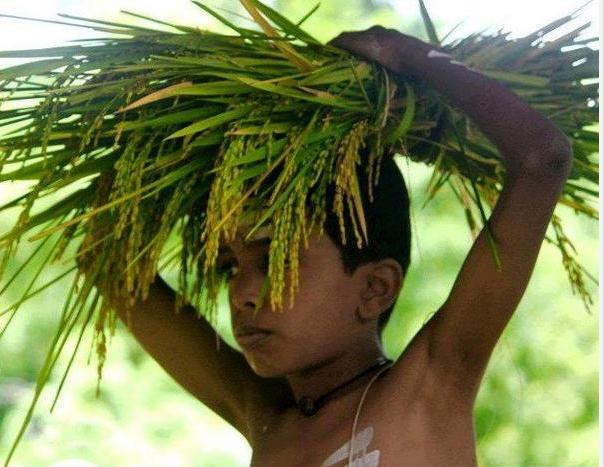
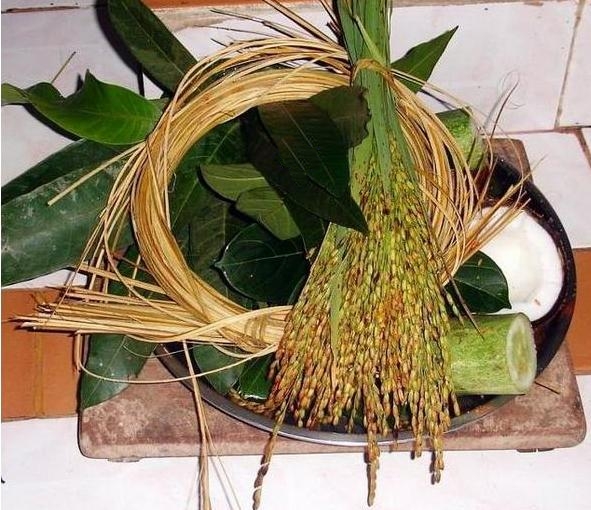
Of the region's agricultural traditions, Hosthu (Hosatu, Thene Habba) holds a special place, a festival of gratitude and abundance marking the season's first paddy harvest. Through the ritual of Kadiru Kattuvudu, freshly cut golden paddy ears are decorated and tied at doorways, the Tulasi Katte, shrines and cattle sheds; the first rice is offered to the divine before being eaten, and the family gathers for the new-rice feast of Hosa Akki Oota. It is usually observed in the Navaratri–Dussehra season.
Jakni, ancestors, Daivas and the jackfruit season
Among the more unusual traditions of Kundapura is Jakni, a deeply rooted community observance that combines Daiva worship, ancestral remembrance, family gatherings and seasonal food. Held in the summer months of April and May, it coincides with the end of the agricultural cycle and the arrival of the jackfruit season, linking the spiritual and the seasonal in a single celebration.
Its first strand is Daiva Aradhane: offerings are made to the Daivas and Ganas regarded as protectors of families, lands and villages, traditionally including a ritual offering of chicken alongside rice-based and coconut preparations and seasonal foods, performed with devotion according to each family's custom. Its second is the remembrance of ancestors: families gather to honour departed relatives with special food offerings and prayers, recalling their stories and values, a deeply emotional aspect of the observance. And its third is the jackfruit season itself, when homes fill with the aroma of ripe jackfruit and families prepare a wide range of traditional dishes together.
| The three strands of Jakni | What it involves |
|---|---|
| Daiva Aradhane | Offerings to the guardian Daivas and Ganas, by family tradition. |
| Ancestral remembrance | Honouring departed relatives with food offerings and prayer. |
| The jackfruit season | Halasina kadubu, jackfruit idli, pundi, payasa, appo, papad, chips and more, sweet and savoury. |
Few observances bring together devotion, ancestor remembrance, seasonal food, family reunion and community participation in such an integrated way, and despite changing lifestyles, Jakni continues to be kept by many families as an expression of gratitude, remembrance and togetherness.
Wedding traditions
Traditional weddings in Kundapura are elaborate cultural events, combining traditional rituals, family gatherings, religious ceremonies, cultural customs and community participation. Many of these customs have been preserved over generations, and the celebrations serve as occasions for families and communities to come together.
Cuisine as culture
Main article: Cuisine of Kundapura
Food occupies a central place in the culture of Kundapura, reflecting the influence of coastal geography, agriculture, religious tradition and community practice. Traditional meals emphasise freshness, flavour and local ingredients (rice, coconut, spices, vegetables and seasonal produce) and festive meals are often elaborate preparations served on banana leaves. Food here is not merely nourishment but an important expression of hospitality and cultural identity.
Land, sea and livelihood
Two occupations have shaped the culture above all. Agriculture has influenced festivals, seasonal celebrations, community cooperation and local customs for centuries, the agricultural calendar often determining the timing of cultural and religious events, Hosthu among them. And the region's fishing communities developed their own traditions, customs and social practices connected to the sea, from seasonal rituals to maritime folklore, so that the sea remains an important cultural symbol of the region. See Economy of Kundapura for these livelihoods in depth.
Hospitality and social etiquette
Hospitality is a defining characteristic of Kundapura culture: guests are traditionally received with great warmth and respect. Social etiquette emphasises courtesy, respect for elders, generosity, community support and mutual cooperation, values that continue to shape daily interactions.
Continuity in modern times
One of the most remarkable aspects of Kundapura culture is its ability to adapt without losing its core identity. Modern education, technology and globalization have changed daily life, yet traditional customs remain visible and relevant, people still celebrate the festivals, speak the dialect, take part in cultural events and maintain strong community ties. Efforts to preserve this heritage continue through the promotion of Yakshagana, the preservation of dialects, the documentation of folklore, support for traditional arts and cultural education programmes led by community organisations.
See also
References & notes
- Compiled report: "The Culture of Kundapura, a Living Heritage of Coastal Karnataka."
- Studies of Tulu Nadu, Kundapra Kannada and coastal folklore.
- Community and family accounts of Bhoota Kola, Hosthu and Jakni.
Photographs were contributed by residents and visitors documenting the region's culture, and are used for educational and cultural reference, not for commercial purposes.