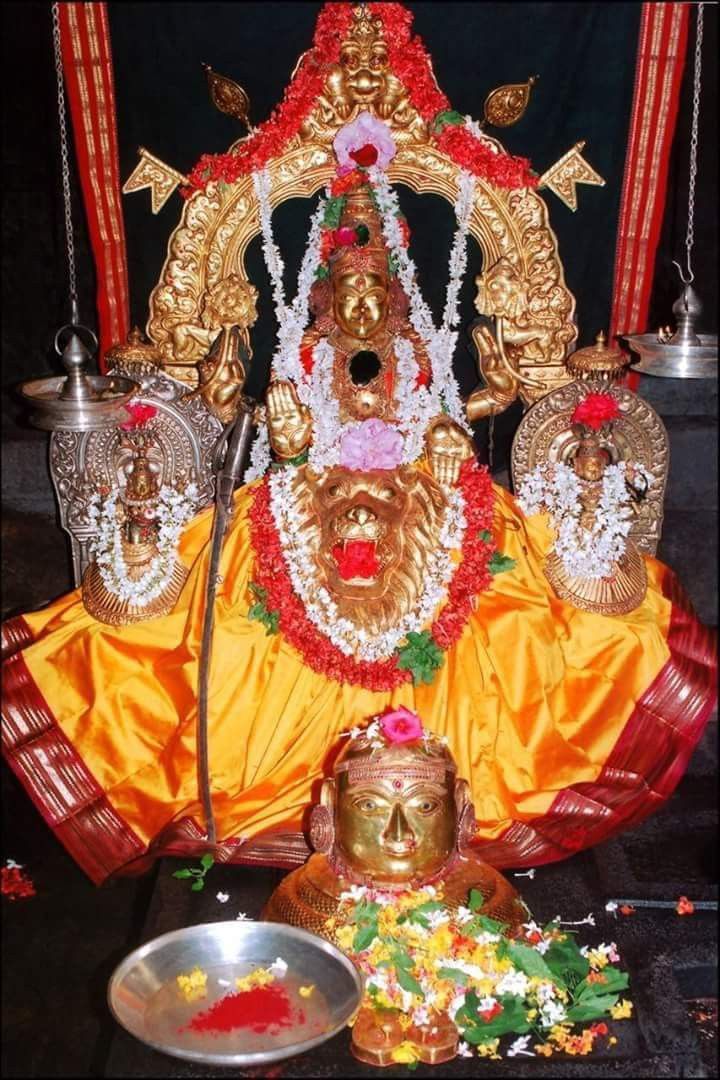
Kollur Mookambika Temple
Shri Kshetra Kollur, history, mythology, spirituality and a complete pilgrimage guide.
Nestled at the foot of the Kodachadri hills in the Western Ghats of coastal Karnataka, the sacred town of Kollur is one of South India's most revered pilgrimage destinations. At its heart stands the Shri Mookambika Devi Temple, dedicated to the Mother Goddess in her triple-powered form as Mahakali, Mahalakshmi and Mahasaraswati, a place where mythology and nature intertwine in every stone, stream and tree.
"Swarnarekhankitam lingam nasti nasti jagatraye / Vamabhaga desham lingam na bhooto na bhavishyati", This swayambhu linga, marked by the golden line, exists nowhere else in the three worlds; it did not exist in the past, nor shall it in the future.
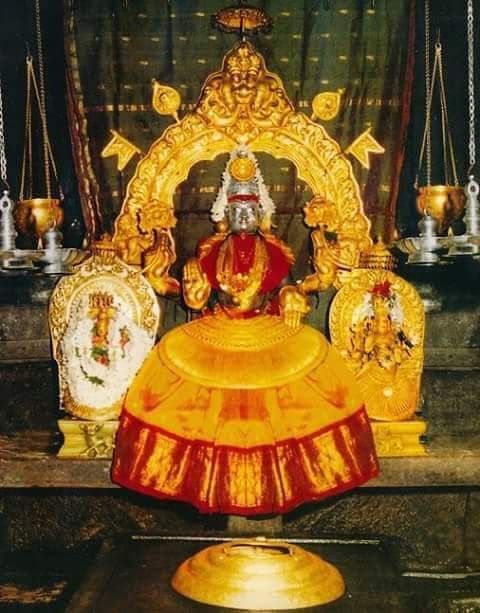 Mookambika Devi
The sacred town of Kollur
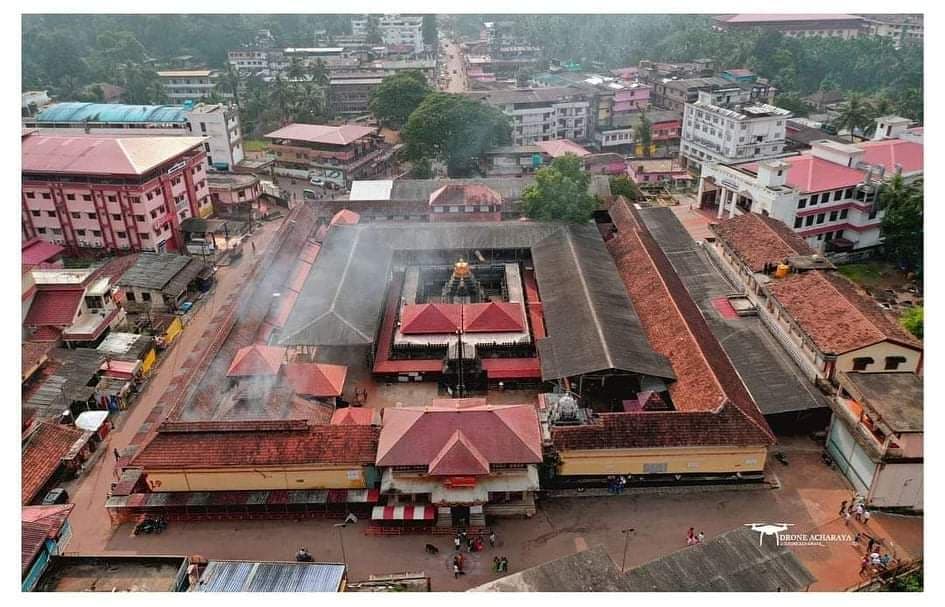
Kollur lies in Byndoor Taluk of Udupi District, Karnataka, about 80 km from Udupi city and roughly 135 km from Mangaluru, on the southern bank of the sacred Souparnika river and cradled by the lush evergreen forests of the Western Ghats, a UNESCO World Heritage biodiversity hotspot. The town is small, yet it draws millions of pilgrims a year from Karnataka, Kerala, Tamil Nadu and beyond. It is said that no visit to coastal Karnataka is truly complete without the darshan of Mookambika Devi.
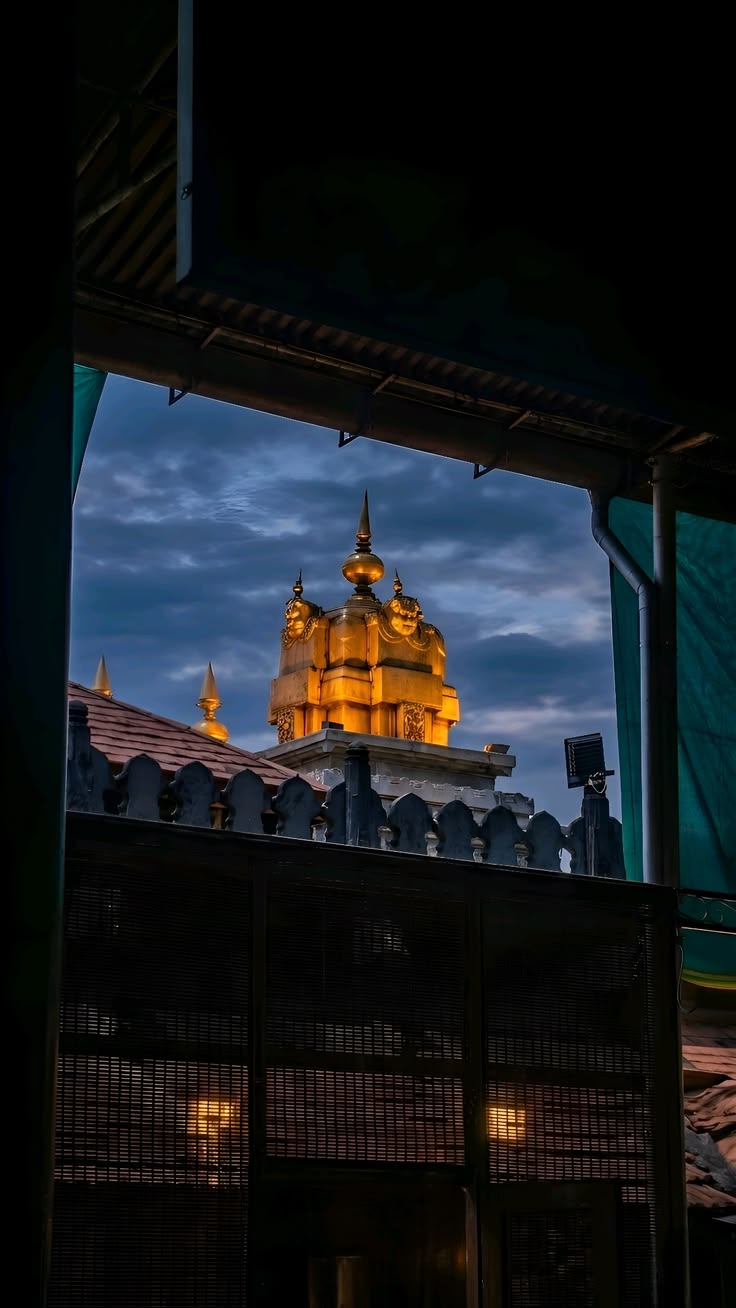
The ancient Puranas describe the land between Gokarna in the north and Kanyakumari in the south as Parashurama Kshetra, the holy coast reclaimed from the sea by the sixth avatar of Vishnu. Kollur occupies a particularly sacred position within this larger geography. Surrounded by the Mookambika Wildlife Sanctuary, the temple town is enveloped in a biodiversity corridor home to elephants, leopards, Malabar giant squirrels and hundreds of bird species. The air is perpetually fragrant with incense, temple bells mingle with birdsong and the murmur of the Souparnika, and the golden gopura gleams above the treeline like a beacon.
The Swayambhu Jyotirlinga & the Panchaloha idol, heart of the temple
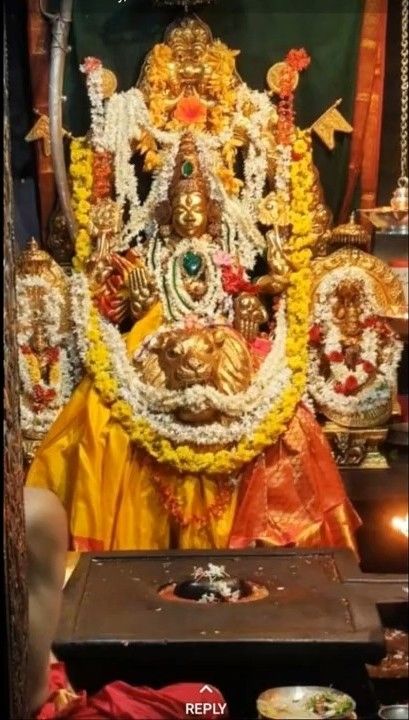
At the very heart of the sanctum is an extraordinary object of veneration: a Swayambhu Linga (a linga that manifested of its own divine will, arising from the earth unmarked by human craft) revered as a Jyotirlinga that incorporates both Shiva and Shakti. It is unique in the entire Hindu cosmos, for it bears a golden line (Swarnarekha) running vertically across its face, dividing it into two cosmologically significant halves.
According to the Skanda Purana and the temple's oral tradition, the left side of the golden-lined linga represents the feminine triad (the Tridevis (Parvati, Lakshmi and Saraswati)) while the right side represents the masculine triad, the Trimurtis (Brahma, Vishnu and Shiva). The linga thus embodies the complete Cosmic Being: the inseparable union of Shakti and Brahman. This is why Kollur Mookambika is considered the supreme manifestation of Advaita, non-duality, in sacred form. The left side is wider and taller than the right, visually reflecting the primacy of Shakti in this kshetra.
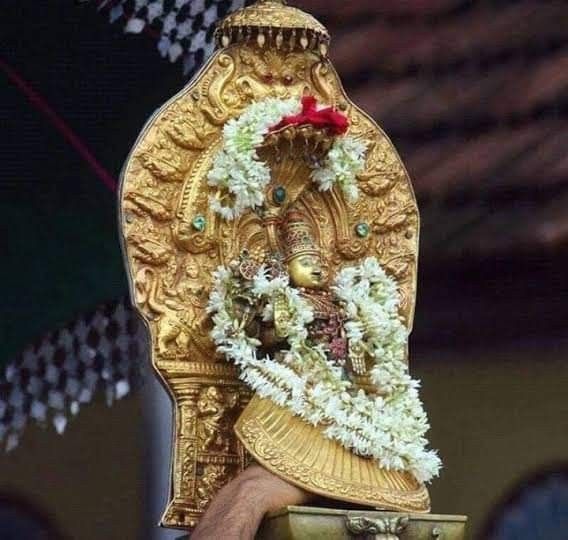
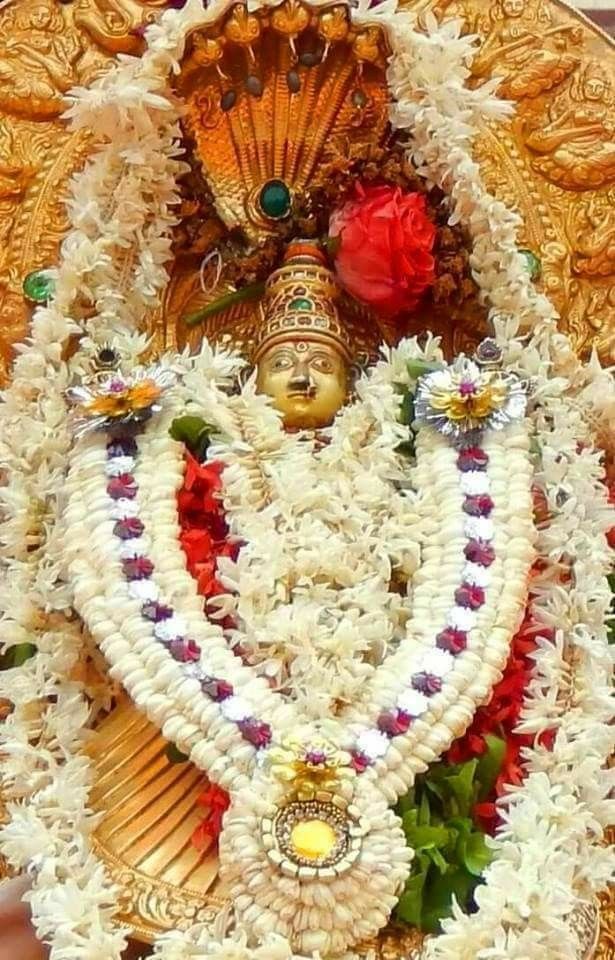
Lord Parameshwara is said to have drawn the Sri Chakra with his toe at this very spot, and the sage Kola Maharshi performed long penance here; the spiritual energy so permeated the earth that the linga arose spontaneously. For the devout, the linga is not merely a religious object. It is the tangible form of the Sri Chakra Bindu, the central point of the cosmos. Installed directly behind the Jyotirlinga is the four-armed Panchaloha idol of Goddess Mookambika, which tradition holds was consecrated by Adi Shankaracharya upon the Sri Chakra, so that the self-born linga and the Goddess's image are worshipped together at darshan.
Origin and etymology: the name 'Kollur'
The oldest name for this place, according to the Skanda Purana, is Maharanyapura, "the city of the great forest", reflecting an early landscape of vast primordial woodland inhabited by sages and celestial presences. In the third Manvantara, during the reign of King Uttama Manu, the sage Kola Maharshi discovered the Swayambhu Linga in this dense forest, settled here and performed intense tapas. In his honour the place became Kolapura: "the city of Kola."
Over centuries the spoken Kannada softened Kolapura to Kollur. The shift is documented in regional inscriptions and texts, including the 18th-century Kannada work Keladi Nrupa Vijaya (1750 CE). The temple is also known as the Kolapura Adi Mahalakshmi Temple, acknowledging both its ancient identity and its association with Mahalakshmi, one of the three aspects of the Goddess.
Mythology and legends
The legend of Kaumasura / Mookasura
The founding myth centres on a demon named Kaumasura. Instructed by his guru Shukracharya, he performed fierce penance to Mahabhairavi and won a boon that no man could kill him; armed with invincibility he terrorised the three worlds. Warned that a woman could still destroy him, he undertook a second, even fiercer penance, sitting amid the five sacred fires (Panchagni), to invoke Paramashiva and obtain universal invincibility.
As Shiva descended to grant the boon, the gods begged the Goddess to intervene. She assumed the form of Vagdevi, the Goddess of Speech, and entered the demon's tongue. When Shiva asked him to state his wish, no words came. He had become mooka (mute). Shiva departed without granting the boon. Enraged, the demon (now called Mookasura, the Mute One) went to war. The Goddess, riding her lion, confronted him in battle.
At the moment of death, the Goddess restored his speech and asked his final wish. Transformed by her proximity, the demon replied: "To die at your sacred hands is my supreme fortune. I ask only that henceforth you be known by my name, so that I may live eternally through your glory." Moved, she granted him moksha and became known as Mookambika, Ambika who silenced the mooka.
Adi Shankaracharya and the golden anklets
The second great legend concerns Adi Shankaracharya, the 8th-century philosopher-saint and founder of Advaita Vedanta. Meditating at the summit of Kodachadri, he beheld the Goddess in her fierce Ugra Rupa. Unshaken, he replied, "How can I fear you, O Mother of the Universe?", and pleased by his fearlessness she revealed her gentle Saumya Rupa. He asked her to come to Kerala for the benefit of all devotees. She agreed on one condition: she would follow behind him, but the moment he turned to look, she would stop and move no further.
As they walked, Shankaracharya was reassured by the tinkling of her anklets. But near the banks of the Souparnika the sound ceased; unable to resist, he turned. True to her word, the Goddess stopped, and gave him a new directive: "Here, near this Swayambhu Linga, I will merge with the linga and remain forever. Establish a Sri Chakra, install my image, and set up the puja." Shankaracharya consecrated the idol on the Sri Chakra Yantra, established the Panchaloha image, and instituted the worship that continues to this day. The Shankaracharya Peetha is preserved on the western side of the sanctum.
The Goddess Mookambika: form and significance
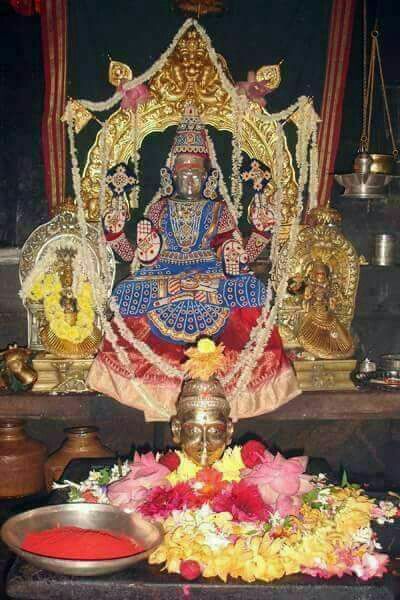
Mookambika occupies a unique place in the Hindu cosmos. She is at once the Goddess of Speech (Vagdevi/Saraswati), the Goddess of Power (Shakti/Parvati) and the Goddess of Prosperity (Lakshmi), the living embodiment of the Trishakti, the unified divine feminine encompassing knowledge, wealth and liberation.
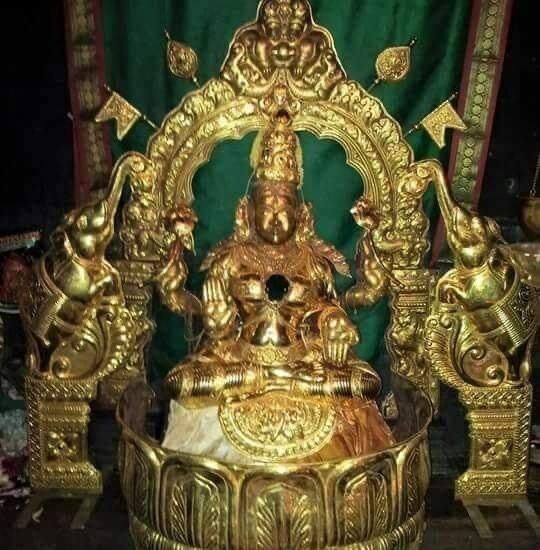
The Panchaloha idol (an alloy of gold, silver, copper, iron and lead) depicts the Goddess seated in Padmasana. She has three eyes (knowledge of past, present and future) and four arms: one holds the Shankha (conch, the primordial Om), another the Chakra (cosmic law and protection), while the remaining hands rest in the Abhaya Mudra ("fear not") and the Varada Mudra ("your wish is granted"). As the Goddess of Speech she is the deity of Matru, Mantra and Akshara (mother, sacred sound and letter) and scholars, students, writers and artists across South India seek her blessing before beginning important work.
Sapta Muktisthala, one of seven abodes of liberation
Kollur is counted among the Sapta Muktisthalas, the seven holy sites of coastal Karnataka where, by tradition, liberation (moksha) can be attained. They were created, it is said, by Parashurama for the spiritual benefit of humanity; to visit all seven in a single journey is among the most meritorious acts of devotion in the Tulu-Kannada tradition. Kollur, the seat of the Mother Goddess, is often regarded as the crown of this circuit.
| Muktisthala | Presiding deity |
|---|---|
| Kollur | Goddess Mookambika |
| Udupi | Lord Krishna (Chandramouleshwara) |
| Subrahmanya | Lord Subramanya (Kukke) |
| Kumbhashi | Brahmi Durgaparameshwari / Anegudde Vinayaka |
| Kodeshwara | Kodeswara Shiva (Koteshwara) |
| Shankaranarayana | Shiva and Vishnu in one form |
| Gokarna | Mahabaleshwara linga |
Temple architecture
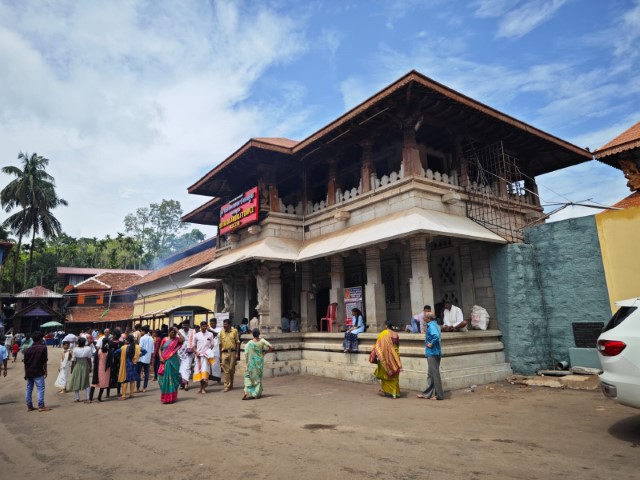
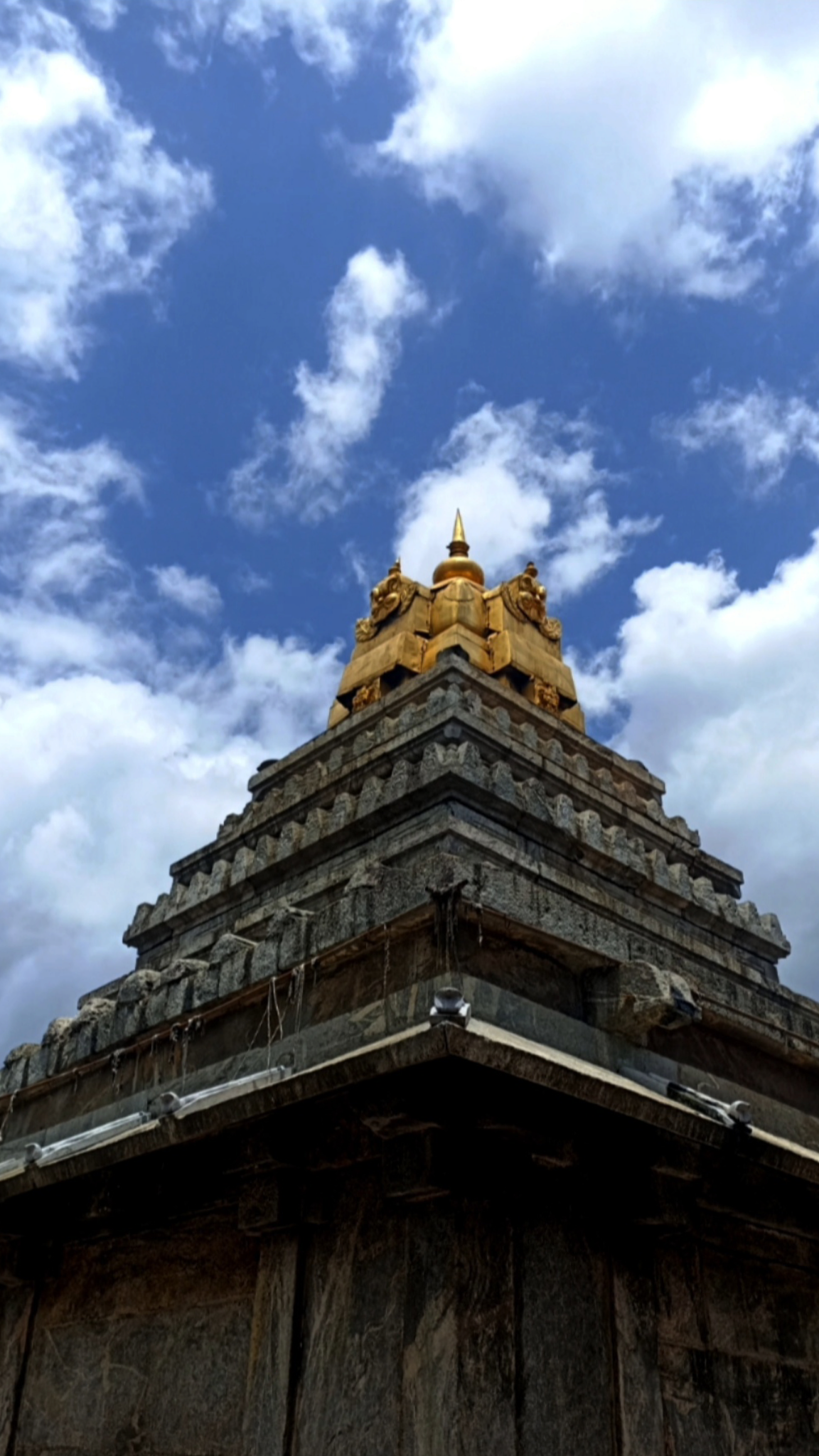
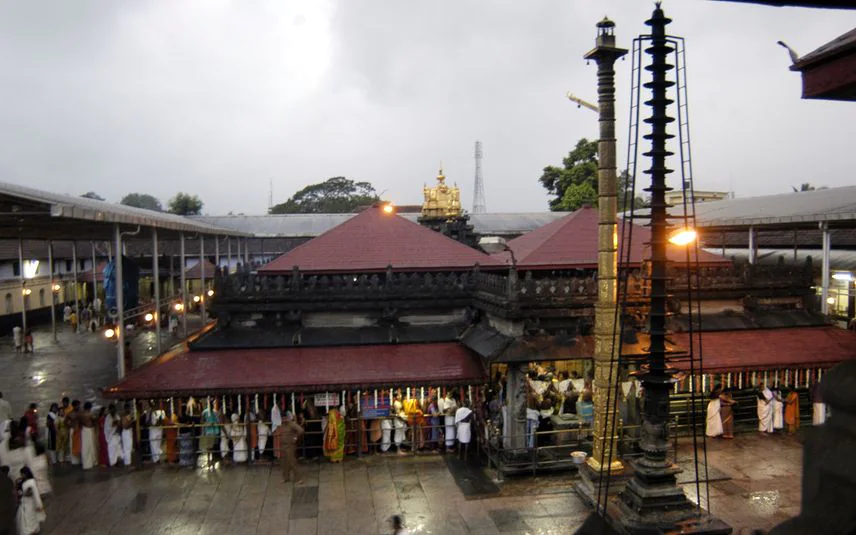
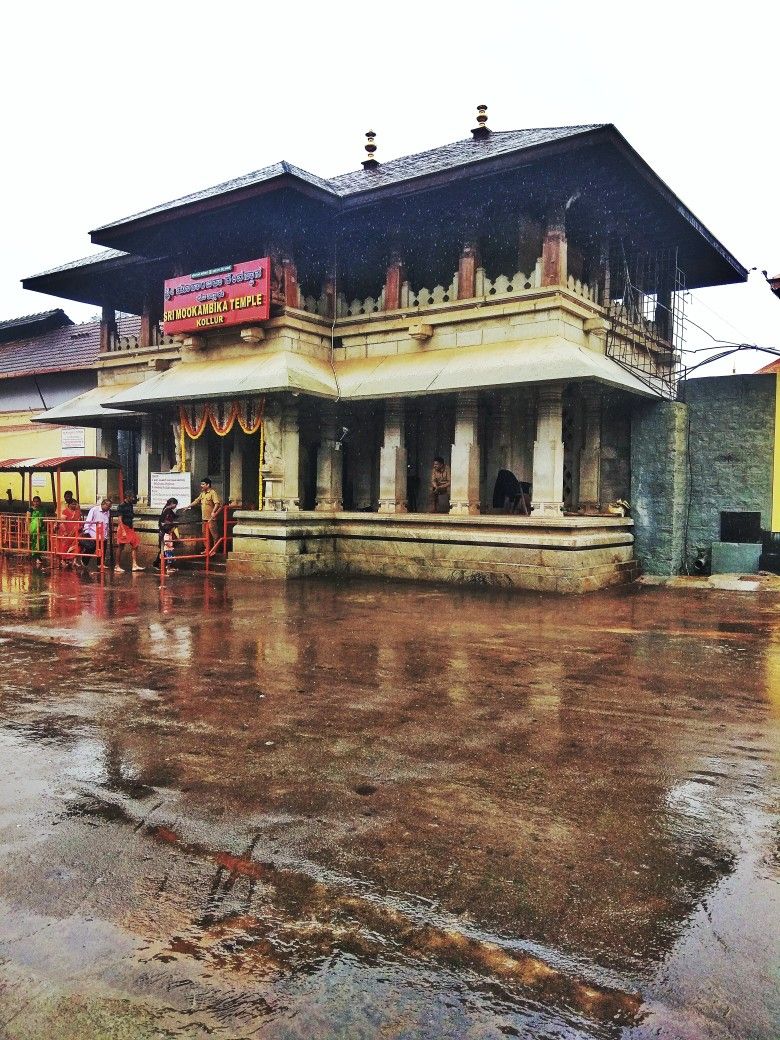
The temple is a magnificent specimen of religious architecture reflecting the patronage of multiple dynasties across more than a millennium. The current structure is broadly attributed to the Keladi period (c. 16th–18th century), though it was first established as a stone shrine around 800 CE. Its style blends three regional traditions: the Dravidian pyramidal tower (vimana/gopura), the intricate sculptural detail of the Hoysala tradition, and the elaborately pillared mandapas of Vijayanagara.
The quadrangular sanctum (garbhagriha) is crowned by a Vimana Gopura whose summit is plated in gold donated by regional kings. A series of open and semi-open mandapas leads the pilgrim inward; their walls carry carvings of Puranic scenes and cosmic geometry. The copper roofs and the gold kalasha catch the sunlight and create a shimmering crest above the Kollur skyline. Inscriptions in the premises record donations from the Vijayanagara, Keladi Nayaka, Mysore and Travancore courts.
The idol and sacred treasures
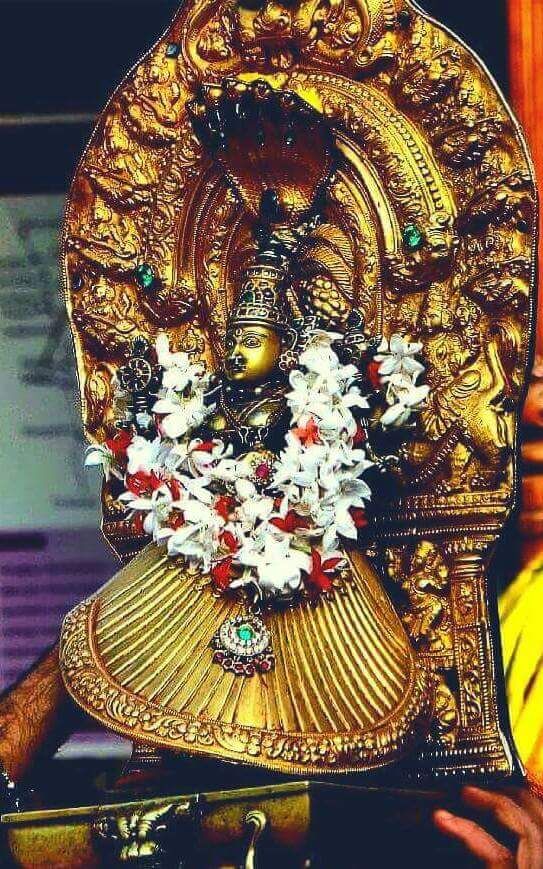
The Panchaloha idol, placed directly behind the Swayambhu Linga so both are seen together at darshan, is among the most spiritually powerful consecrated images in Karnataka. She is adorned with extraordinary jewellery gifted by centuries of royal and devotional patrons.
| Treasure | Donor & significance |
|---|---|
| The Emerald | A palm-sized emerald gifted by Queen Chennammaji of Keladi, emerald symbolises jnana (knowledge), fitting for the Goddess of Speech. |
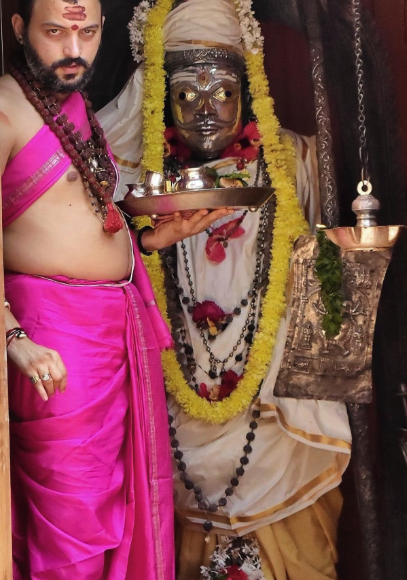
| The Gold Mask | A golden facial mask gifted by the Vijayanagara emperor Krishnadevaraya, applied on festive occasions. |
| The Gold Lingam Mask | A separate gold mask for the Swayambhu Linga, donated by Chennammaji of Keladi. |
| The Golden Sword | Donated by M. G. Ramachandran (MGR), one kilogram of gold, two feet long. |
| The Silver Sword | Donated by former Karnataka Chief Minister Gundu Rao, a symbol of victory and protection. |
 Golden kavacha
 Oldest known photograph
Royal patronage and history
The history of the temple is inseparable from the kingdoms that revered the Goddess as their tutelary deity.
The first stone shrine
A stone structure is established, with attributions to King Halugallu Veera Sangayya.
The earliest inscription
A stone inscription at Kollur describes the linga as the tangible form of Adi Shakti, evidence of organised worship by the 15th century.
Vijayanagara
Emperor Krishnadevaraya donates the gold facial mask that still adorns the Goddess on festive days.
The Keladi Nayakas
The Keladi kings revere Mookambika as their kula devata; Shankanna and Shivappa Nayaka rebuild and gild the temple and gift the world-famous Marakata Padaka pendant.
Keladi Nrupa Vijaya
The court poet Linganna Kavi fills his Kannada chronicle with references to the Mookambika shrine.
The Salam Arathi
Tipu Sultan is said to have visited and saluted the Goddess; a ceremonial Salam Arathi commemorates the visit to this day.
Mysore & Travancore
Maharaja Jayachamarajendra Wodeyar and Travancore's Chithira Thirunal visit and perform special poojas.
Rituals and daily worship
Daily worship follows a strict Agamic routine largely unchanged since the time of Adi Shankaracharya, organised around the Trikala Puja, three principal sessions a day.
Nirmalya Darshan
The previous day's offerings are removed and the Swayambhu Linga is seen in its unadorned, pristine form, followed by the Dantha Dhavana Mangalarathi.
Panchamritha Abhishekam & Chandika Homa
The linga and idol are bathed in five sacred substances; seven priests recite 700 verses of the Devi Mahatme and offer payasam 700 times to the sacred fire.
Naivedya & Kashaya Theertham
Food, light and devotional song; the medicinal herbal Kashaya, said to have been given by the Goddess to an ailing Shankaracharya, is distributed.
Rudrabhishekam, Kumkumarchana, Laksha Deepotsava
Personalised rituals commissioned by pilgrims for prosperity, health, success in studies and resolution of disputes.
Festivals and celebrations
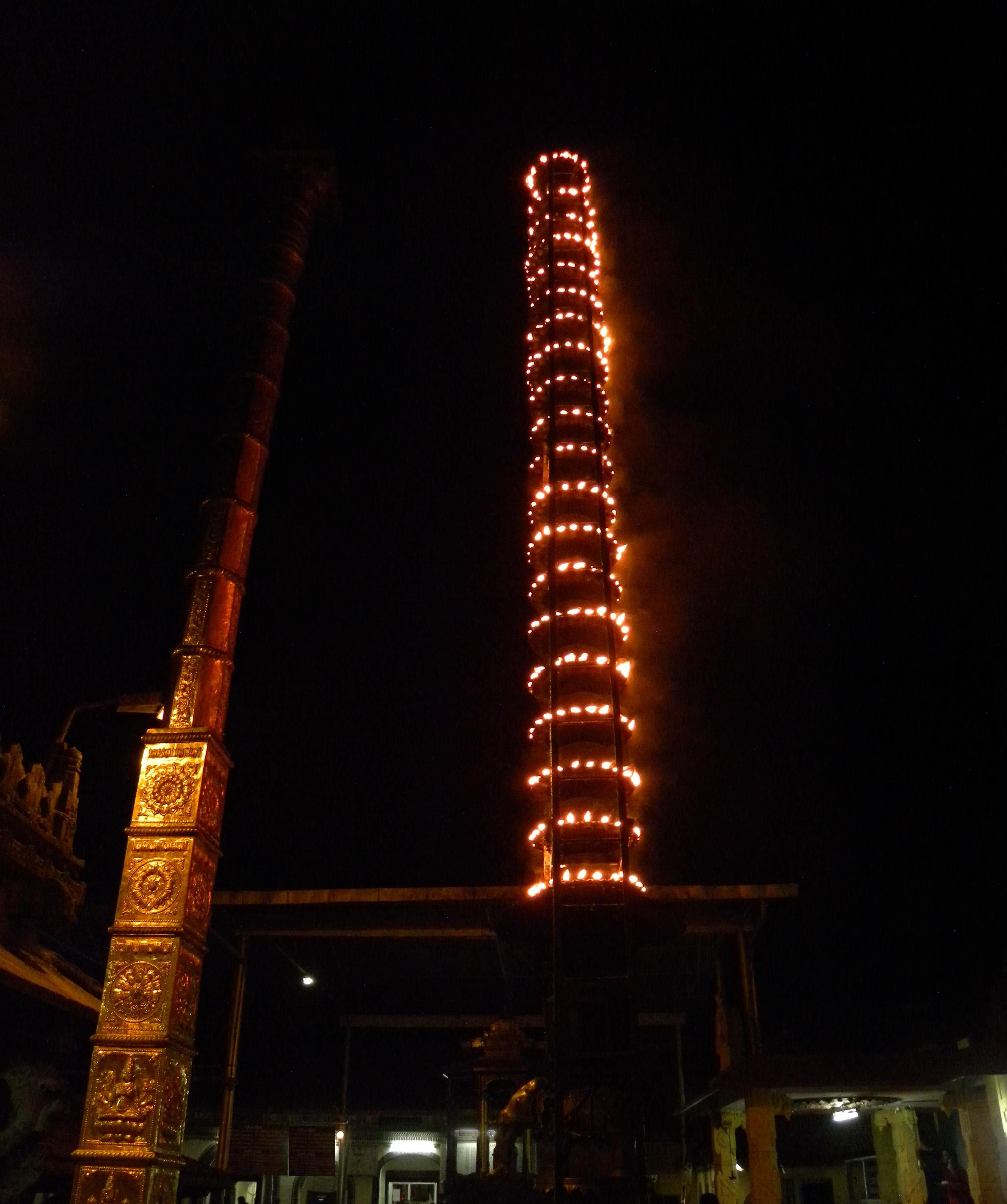
Navaratri (September–October), the nine-night celebration of the divine feminine, is the temple's greatest festival. The idol is adorned each day in a different Navadurga form, the Chandi Stotra is recited on all nine days, and hundreds of thousands of pilgrims arrive. On Mahanavami the Goddess rides a decorated Pushparatha in procession; the festival concludes on Vijayadashami.
Vijayadashami is also the great day of Aksharabhyasa, the initiation of children into letters (see below). The annual Rathotsava (chariot festival) falls in Phalguna (March–April), the Goddess's birth anniversary on the Moola Nakshatra day. Once every twelve years the temple undergoes the elaborate Ashtabhandha Brahmakalashotsava rededication; the 2002 ceremony involved the Sahasra Kumbhabhisheka with 1,008 sacred vessels and some 200 priests.
Sub-shrines and other deities
Around the supreme shrine of the Goddess, the complex houses a complete divine assembly, a deliberate theological inclusivity that embraces Shaiva, Vaishnava and Shakta traditions in one sacred landscape:
- Subramanya (Kartikeya), son of Shiva and Parvati, god of war and wisdom.
- Dashabhuja Ganapathi, the ten-armed Ganesha, first to be propitiated in every ritual.
- Chandramouleshwara, Shiva crowned with the crescent moon.
- Gopalakrishna, Krishna the divine cowherd, the Vaishnava presence.
- Veerbhadra Swamy, a fierce form of Shiva, guardian deity of the kshetra.
The Souparnika river
The Souparnika (named for Suparna (Garuda), the eagle-mount of Vishnu, who is said to have performed penance on its banks) flows past the temple and is as sacred to coastal devotees as the Ganges. It originates at the Kodachadri summit and travels about 64 km westward to meet the Arabian Sea near Kundapur, passing through the Mookambika Wildlife Sanctuary. Pilgrims traditionally bathe in the Souparnika before darshan, a purification of body and mind. A famous stretch is at Maravanthe, where the river runs parallel to the sea, separated only by a narrow strip of land.
Kodachadri, the mountain of the Goddess
Kodachadri, rising to 1,343 m some 20–33 km from Kollur, is inseparable from the temple's spiritual identity. The 10th-highest peak in Karnataka and the source of the Souparnika, it is often called the "Jasmine of the Hills." At its summit stands the Sarvajna Peetha, the stone "seat of omniscience" where, by tradition, Adi Shankaracharya meditated. A small Mookambika temple at the mountain's foot is considered the original shrine, where the Goddess first appeared to him before directing him to establish the permanent temple at Kollur.
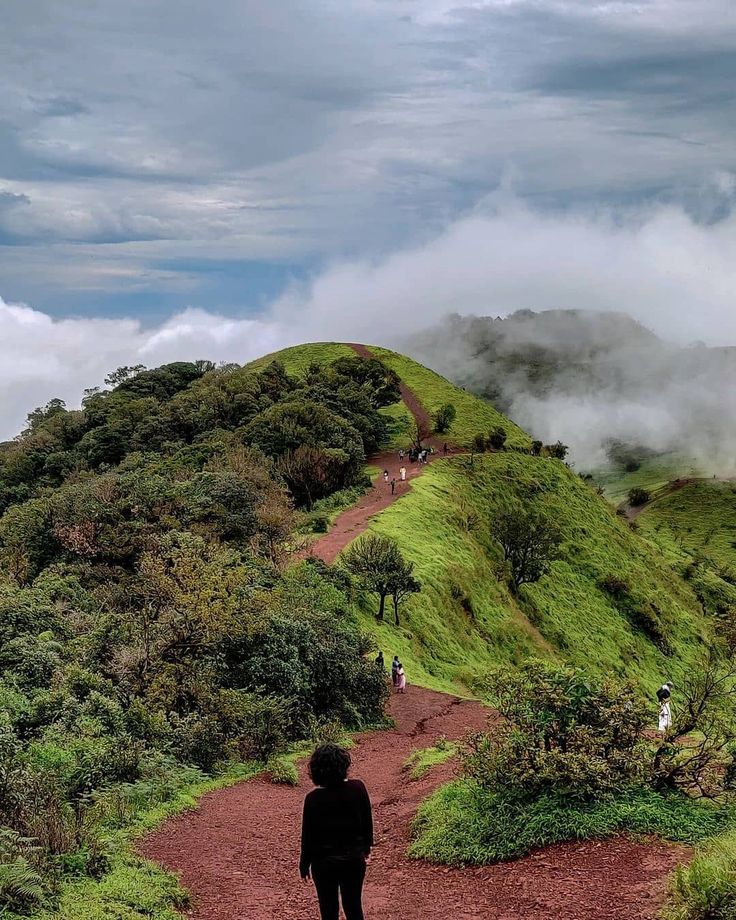
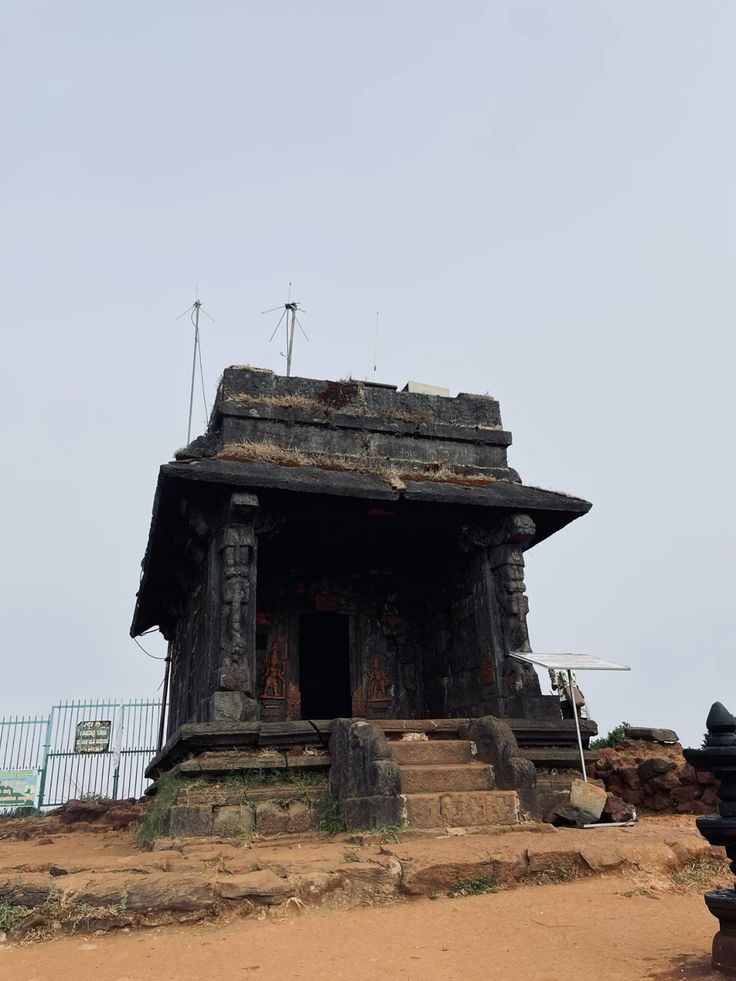
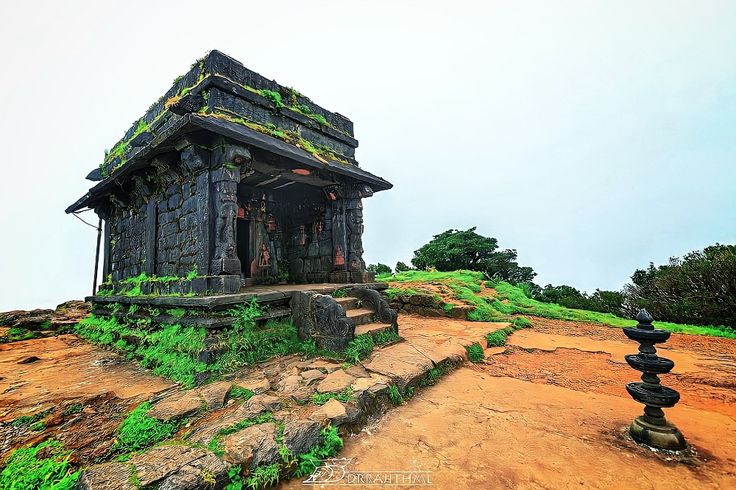
The surrounding Mookambika Wildlife Sanctuary (about 370 sq km) shelters Asian elephants, leopards, gaurs, king cobras, the endemic Nilgiri langur and birds such as the Malabar trogon and hornbill. The tradition of the Goddess residing in, and protecting, the forest is here a living reality.
Aksharabhyasa: the gift of learning
Of all the rituals at Kollur, none is more beloved than the Aksharabhyasa, the first-letter ceremony for young children. The word joins Akshara (letter, also "the imperishable") and Abhyasa (practice): "the study of the imperishable." In the Saraswathi Mantapa, during Vijayadashami, thousands of children aged two to four trace Om Hari Shri Ganapataye Namaha and their first letters in rice or on a slate, a finger guided by the family elder who acts as first guru.
She is the Goddess who silenced the demon, yet she is the source of all eloquence, all learning, all sacred sound.
Only when the ego is silenced can the divine voice of wisdom speak through us. This paradox is the heart of Mookambika's identity, and why parents present their children to her at the threshold of learning.
Travel guide & practical information
| Getting there | Details |
|---|---|
| By air | Mangaluru International Airport (~135–140 km), 3–4 hours by road. |
| By train | Mookambika Road (Byndoor) station on the Konkan Railway, ~20–25 km; Udupi station (~80 km) for major-city trains. |
| By road | ~41 km from Kundapur; ~400–420 km from Bengaluru with overnight KSRTC and private buses. |
| Best time | October–February (cool, lush). Navaratri is most festive but most crowded; the monsoon is green but roads can be difficult. |
| Timings | Opens ~5:00 AM (Nirmalya Pooja), closes ~9:00 PM; varies on festival days. |
| Dress code | Traditional attire, dhoti/lungi or trousers for men (no sleeveless in the sanctum); saree or salwar kameez for women. Footwear removed at the premises. |
| Prasadam | Free meal service (annadana) all day, plus the medicinal Kashaya Theertham. |
A free meal service for all pilgrims, dharmashalas at various price points, and online seva booking via the temple's official website are run by the temple trust. For combining the pilgrimage with a Kodachadri trek, homestays are available at Nittur and Nagodi at the trek's base.
See also
References & notes
- "Shri Kshetra Kollur, Sri Mookambika Devi Temple: History, Mythology, Spirituality & Complete Pilgrimage Guide" (compiled guide), based on the Sapta Muktisthala voiceover script.
- Kollur Mookambika Temple official website (kollurmookambikatemple.org).
- Skanda Purana, Mangalya Kanda, as preserved in temple tradition.
- Linganna Kavi, Keladi Nrupa Vijaya (1750 CE); Kollur stone inscription dated 1481 CE.
- Karnataka Tourism; field accounts of the Kodachadri trek.
- Kollur Mookambika Temple, Wikipedia; Sri Sharada Peetham, Sringeri (sringeri.net/branches/karnataka/kollur), on the Swayambhu Jyotirlinga with the Swarnarekha and the Panchaloha idol consecrated by Adi Shankaracharya behind the linga.
Photographs on this page were contributed by devotees and visitors to document the temple and its festivals; they are used here for cultural and educational reference.