
Hosthu, the Harvest Festival
Gratitude, abundance and reverence for the land.
Among the agricultural traditions of Kundapura, Hosthu (also known as Hosatu, Hosa Thene or Thene Habba) occupies a special place in the cultural life of the region. Celebrated for generations across Kundapura and coastal Karnataka, Hosthu is a festival of gratitude, abundance and reverence for agriculture. It marks the arrival of the season's first paddy harvest, and symbolises the close relationship between the people, the land and the agricultural cycle that has sustained coastal communities for centuries.
The meaning of Hosthu
The word Hosatu literally means "new", and refers to the first harvest of newly ripened paddy. The festival celebrates the arrival of the season's fresh grain and expresses gratitude for a successful cultivation cycle. For farming communities the first harvest is considered sacred: before the grain is consumed, it is ceremonially offered to divine forces, family deities and household gods, an act that reflects the belief that agricultural prosperity is a blessing to be acknowledged with humility and gratitude.
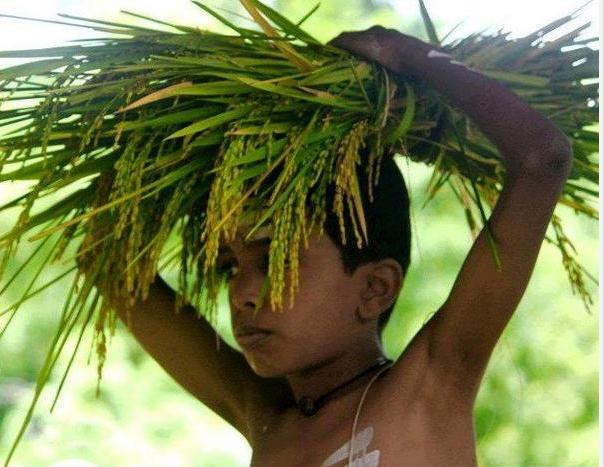 Bringing home the first harvest
Kadiru Kattuvudu, tying the paddy ears
One of the most important rituals of Hosthu is Kadiru Kattuvudu, the ceremonial tying of paddy ears. Freshly harvested stalks are carefully selected from the field and brought home with reverence, then decorated and tied at the most important places in and around the household. The golden ears serve as a visible reminder of the successful harvest and the blessings received, symbolising prosperity, fertility and the arrival of abundance into the home. They are tied at:
- Home entrances, the threshold of the household
- Tulasi Katte, the sacred basil platform
- Household shrines, the family's place of worship
- Cattle sheds, honouring the animals of the farm
- Temples, the community's shared sacred space
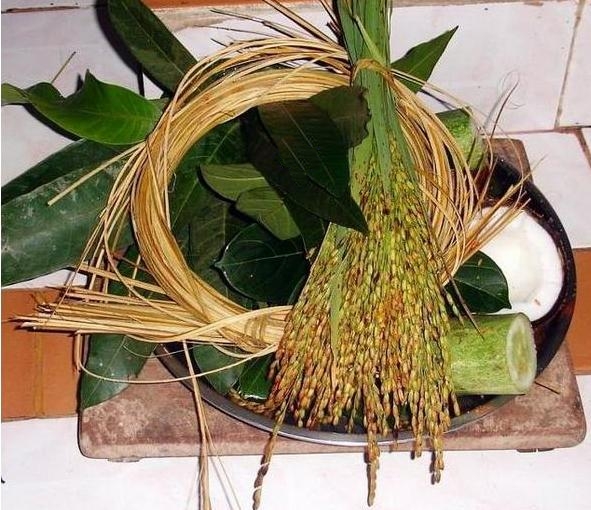
Offering the first harvest
A central feature of Hosthu is the offering of the first harvest to divine powers before it is consumed by the family. The newly harvested rice is used for Naivedya (food offered to the deity), temple offerings, family rituals and community worship. This tradition reflects the agricultural philosophy at the heart of the festival: that the harvest belongs first to the divine, and only then is enjoyed by humans.
Hosa Akki Oota, the new-rice feast
Following the rituals, families prepare special meals from the newly harvested rice. This feast (commonly known as Hosa Akki Oota, "the meal of new rice") forms the heart of the celebration, when family members gather to share the food and celebrate the blessings of the harvest. Traditional dishes include:
| Dish | What it is |
|---|---|
| New-rice preparations | The season's first grain, cooked as the centrepiece of the meal. |
| Payasa | A sweet pudding, the festive dessert of coastal Karnataka. |
| Traditional sweets | Festival sweets prepared specially for the occasion. |
| Coconut-based dishes | Reflecting the staple flavour of the coast. |
| Seasonal delicacies | Dishes made from the produce of the season. |
When Hosthu is held
In many parts of Kundapura, Hosthu is traditionally observed during the period of Navaratri and Dussehra. Some communities also associate the celebration with Anantha Chaturdashi, depending on local agricultural cycles and village customs. The exact timing varies slightly from village to village, but the central theme remains the same: welcoming the season's first harvest and expressing gratitude for agricultural prosperity.
Agricultural significance
For centuries, agriculture formed the foundation of life in Kundapura, and rice cultivation shaped the economy, social structure, seasonal calendar and cultural traditions of the region. Hosthu emerged as a natural expression of this heritage, a reminder of people's dependence on the soil, the rainfall, the rivers and the collective effort of farming families. The festival celebrates the fertility of the land, a successful harvest, community prosperity, agricultural continuity and respect for nature.
A family and community celebration
Hosthu is also a deeply family-oriented celebration. Relatives gather to take part in the rituals and share the festive meal, while elders explain the significance of the traditions to younger generations, ensuring that this cultural knowledge is preserved. In this way the festival strengthens family bonds, agricultural identity, community unity and cultural continuity.
A living tradition
Although modernization has transformed lifestyles across Kundapura, Hosthu continues to be observed in many households and villages. Through the rituals of Kadiru Kattuvudu, the offering of the first harvest and the celebration of Hosa Akki Oota, the festival preserves centuries-old farming customs and values, an enduring symbol of the region's agricultural heritage and of the deep connection between culture and cultivation.
See also
References & notes
- Compiled report: "Hosthu (Hosatu), the Traditional Harvest Festival of Kundapura."
- Agricultural and folklore traditions of coastal Karnataka.
Photographs were contributed by residents documenting the festival, and are used for educational and cultural reference, not for commercial purposes.